


What Buyers Should Check Before Approving a Custom Dog Collar Sample
Sep 27, 2026
Leave a message
What Buyers Should Check Before Approving a Custom Dog Collar Sample
A custom dog collar sample is more than a visual preview of the finished product. For pet brands, wholesalers, distributors and private-label buyers, the approved sample can become the reference for bulk production. If important details are overlooked at the sample stage, changes may become more difficult and costly after production has started.
Before approving a custom dog collar sample, buyers should check the product from a manufacturing and procurement perspective-not just whether it looks good in a photo.
Check the Collar Dimensions
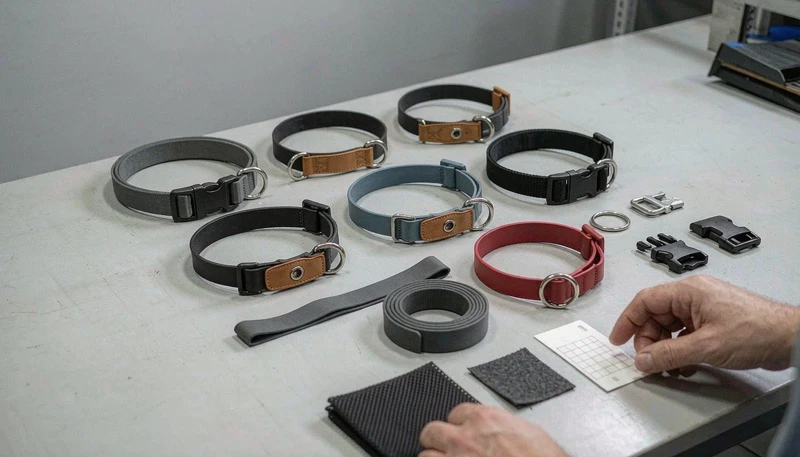
Start with the physical dimensions of the collar. Confirm the finished width, overall length, thickness and adjustment range against the specification provided to the manufacturer.
For adjustable collars, pay particular attention to the usable adjustment range. The collar should provide the intended size coverage without making the adjustment section unnecessarily long or difficult to use.
It is also worth checking dimensional consistency across the sample. If the collar includes several layers, coated webbing or reinforced sections, make sure the finished construction matches the approved specification rather than relying only on the nominal webbing width.
These details should be confirmed before the sample is approved because even small changes can affect the appearance, fit and production requirements of the finished product.
Verify the Material and Surface Finish
The material should match the agreed specification, including the webbing base, coating and surface finish.
For coated dog collars, buyers may need to confirm whether the construction uses PVC or TPU, as well as the expected softness, hardness, texture and finish. The material should also be suitable for the intended market and product positioning.
Do not evaluate the material only by appearance. Flex the collar, inspect the edges and look at areas where the material bends repeatedly. Check whether the surface remains uniform and whether there are visible defects, uneven coating or inconsistent texture.
If the product is being developed in several colors, it is also useful to confirm whether the sample represents the final color and finish standard that will be used for production.
Inspect the Hardware
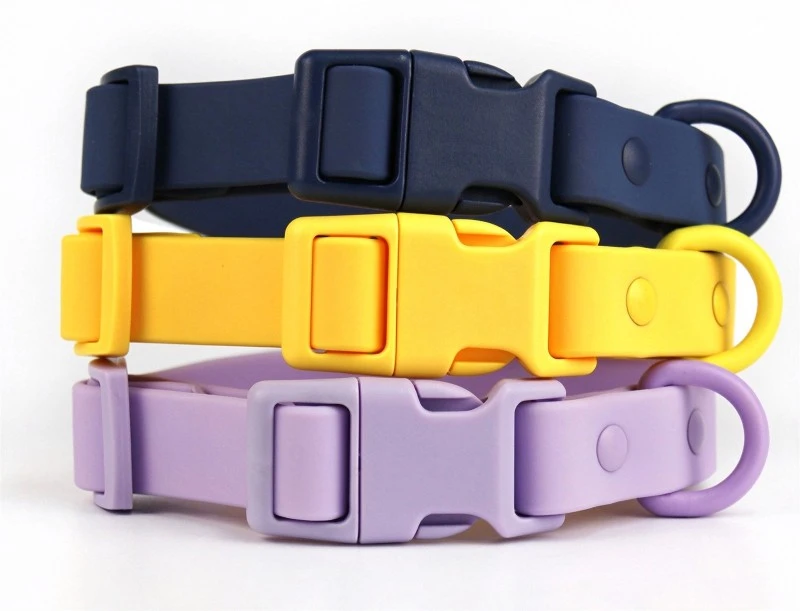
Buckles, D-rings, adjusters and other hardware should be checked individually and as part of the complete collar assembly.
Confirm the hardware specifications, finish, color and dimensions. Operate the buckle and adjuster several times to make sure they function as intended. The D-ring should be correctly positioned and securely connected to the collar rather than simply looking correct from the outside.
For a buyer developing a private-label product, hardware should also be checked for consistency with the intended product positioning. A collar can have suitable webbing and branding but still feel unsuitable if the hardware quality or finish does not match the rest of the product.
Check the Logo and Branding Details
Branding should be reviewed at the actual sample stage rather than approved only from artwork or digital mockups.
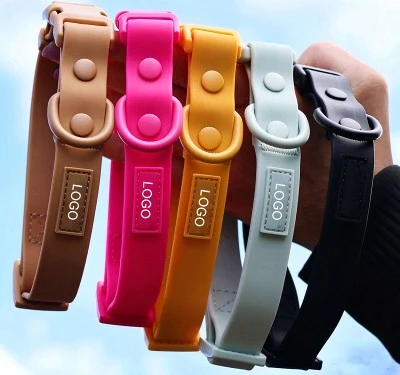
Check the logo position, size, color, orientation and application method. Depending on the product, branding may be printed, embossed, woven or applied in another way.
Look at the logo from normal viewing distance as well as close up. Check whether the placement is consistent and whether the branding remains clear after the collar is adjusted or bent.
If the buyer plans to produce multiple colors or sizes, the approved sample should clearly define which branding specifications remain unchanged across those variations.
Look Closely at Stitching and Construction
The stitching and construction of the collar deserve particular attention around load-bearing areas.
Inspect the stitching near the buckle, D-ring, adjustment section and any reinforced connection points. Look for loose threads, uneven stitching, incomplete reinforcement or poorly finished edges.
The purpose of this inspection is not simply to judge appearance. These construction details can affect how the collar performs during use and whether the finished product consistently follows the approved design.
If the sample uses a particular reinforcement method or stitch pattern, record it as part of the production specification instead of leaving it as an informal visual reference.
Check the Coating and Edge Finish
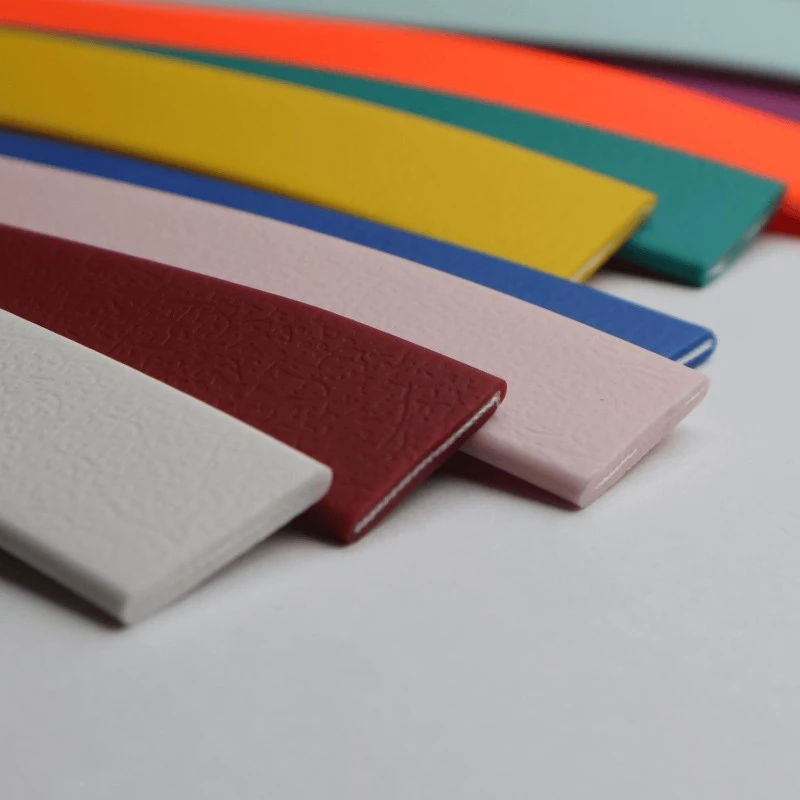
For PVC- or TPU-coated webbing collars, inspect the coating carefully before approval.
The coating should appear uniform across the webbing. Check the edges and areas around bends, stitching and hardware connections for visible cracks, separation or uneven application.
Flex the material several times and examine the surface again. This can help identify issues that are not obvious when the collar is lying flat.
Buyers should also confirm that the coating and surface finish match the approved sample. A change in coating thickness, texture or hardness can alter both the appearance and handling of the final collar.
Confirm Strength at the Relevant Connection Points
Strength should be considered together with the construction of the collar rather than treated as a single number.
Pay attention to the connection points between the webbing and hardware, especially around the D-ring, buckle and reinforced stitching. These areas should correspond to the intended product design and specifications.
If the supplier provides test results or inspection data, buyers should confirm what was tested, under which conditions and whether the test applies to the actual production specification.
This is especially important when the collar is being developed for a specific size range or application. A strength figure without clear test conditions may not provide enough information for procurement approval.
Review the Packaging Before Final Approval
Packaging is often left until the end of the purchasing process, but it should be checked before the sample is fully approved.
Confirm the packaging format, product labels, barcode requirements, quantity per package and any private-label information. If the collar will be supplied to retailers or e-commerce channels, packaging dimensions and presentation may also affect the final product requirements.
If branded packaging is part of the order, the approved packaging sample should be treated as part of the production reference rather than as a separate item to finalize later.
Approve the Sample as the Bulk Production Reference
Once the collar has passed the inspection, the buyer and manufacturer should have a clear understanding of what exactly has been approved.
The final sample should represent the agreed combination of dimensions, materials, hardware, branding, construction and packaging. If any of these details change after approval, the change should be confirmed before bulk production begins.
This is particularly important for repeat orders. An approved sample, together with the confirmed specifications, gives both sides a practical reference for maintaining consistency between the initial order and future production.
From Sample Approval to Bulk Production
Sample approval should be the point where product development becomes a controlled production specification. Once the sample is confirmed, the manufacturer can use the approved details to prepare bulk production, inspection and packaging requirements.
For buyers, the goal is not simply to find a sample that looks right. It is to make sure the sample accurately represents the product they intend to purchase in quantity.
Need a Custom Dog Collar for Your Brand?
Share your target quantity, dimensions, material requirements, colors, branding, hardware and packaging specifications with GH Material. Our team can review your requirements and provide a suitable manufacturing solution.
Custom Dog Collar → Request a Quote