


What Should Buyers Confirm Before Ordering Custom Dog Leashes?
Sep 27, 2026
Leave a message
What Should Buyers Confirm Before Ordering Custom Dog Leashes?

Ordering custom dog leashes is not simply a matter of choosing a color and adding a logo. For pet brands, wholesalers, distributors, and private-label buyers, the decisions made before bulk production can affect product consistency, cost, lead time, and the final customer experience.
A clear specification and an approved production reference can prevent many problems later. Before placing a bulk order, buyers should confirm the product, materials, customization details, production conditions, and quality requirements with the manufacturer.
Start With a Clearly Defined Product Specification
Before asking for a final quotation, it is important to define what the finished dog leash should look and function like.
The basic specification may include leash length, width, thickness, webbing construction, handle design, attachment method, hardware, and packaging requirements. These details can directly affect both production and pricing.
For example, a leash designed for everyday walking may require a different construction from one intended for training or outdoor use. A wider leash, reinforced handle, heavier hardware, or special coating can also change the production requirements.
The more complete the specification is at the beginning, the easier it is for a manufacturer to provide an accurate quotation and prepare a suitable sample.
Confirm the Sample Before Moving to Bulk Production
For a custom dog leash, the approved sample should become the reference for bulk production.
Buyers should check more than the overall appearance. The sample should be reviewed for dimensions, material, flexibility, color, hardware, stitching, logo placement, and connection points.
If the product uses PVC or TPU coated webbing, the surface finish, flexibility, coating adhesion, and overall feel should also be checked according to the intended application.
It is useful to keep the final approved sample or a confirmed specification sheet as the production reference. Any changes made after approval should be confirmed before bulk manufacturing begins.
This step is particularly important for private-label products because the same specifications may need to be reproduced for future orders.
Confirm MOQ Based on Your Actual Requirements
Minimum order quantity is another point that should be clarified before placing an order.
MOQ may depend on the product, color, size, material, customization method, packaging, and production requirements. A manufacturer may offer a lower MOQ for selected standard configurations while more complex customization may require a different quantity.
For selected custom pet products, GH Material can support orders starting from 100 pieces per color and size.
However, buyers should confirm the MOQ for their specific product rather than assuming that one quantity applies to every custom design.
It is also useful to discuss whether different colors, sizes, or packaging configurations are counted separately. Clarifying this before quotation helps buyers calculate their actual purchasing quantity and budget.
Decide on Customization Before Requesting the Final Quote
Customization should be defined as early as possible because it can influence both cost and production time.
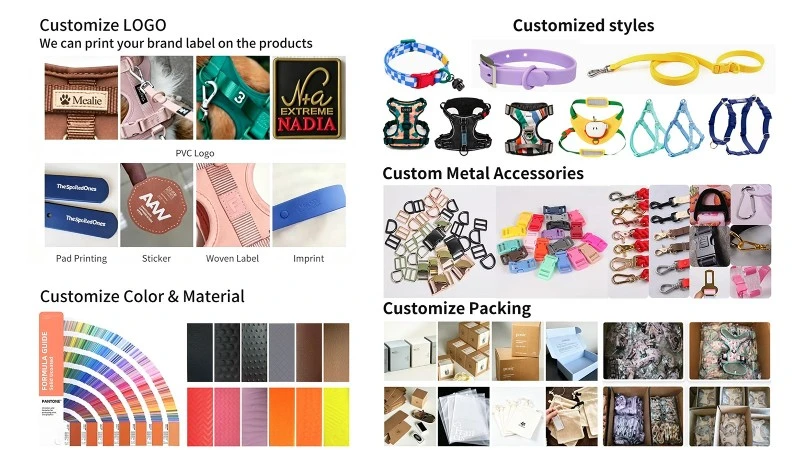
Common customization requirements for dog leashes include:
Length and width
Webbing material
PVC or TPU coating
Color
Hardware
Logo or printed artwork
Reflective elements
Handle construction
Labels
Individual packaging
For brands developing a private-label product, packaging and branding should be considered together with the product itself.
Providing artwork, dimensions, color references, packaging requirements, and expected quantities at the quotation stage allows the manufacturer to evaluate the project more accurately.
If the buyer only provides a product photo without detailed specifications, additional confirmation may be needed before the manufacturer can determine the final construction and price.
Buyers developing a private-label product can also discuss their requirements through our Pet Product OEM & ODM service.
Choose Materials According to the Product Positioning
Material selection should be based on how the leash will be positioned and used rather than choosing a material simply because it is commonly used.
Polyester or nylon webbing can be used as the structural base, while PVC and TPU coatings can provide different surface characteristics and product positioning.
For buyers focused on cost-conscious product lines, PVC coated webbing may be considered for suitable applications. TPU coated webbing may be selected when flexibility, surface feel, appearance, or a more premium product positioning is important.
Other factors should also be considered, including the intended market, product design, required flexibility, surface finish, durability requirements, and target cost.
A manufacturer with in-house material and coating capabilities can also help buyers evaluate how the material choice affects the finished leash rather than treating the webbing as a separate component.

Confirm the Bulk Production Process
Once the sample and specifications are approved, buyers should understand how the product will move into bulk production.
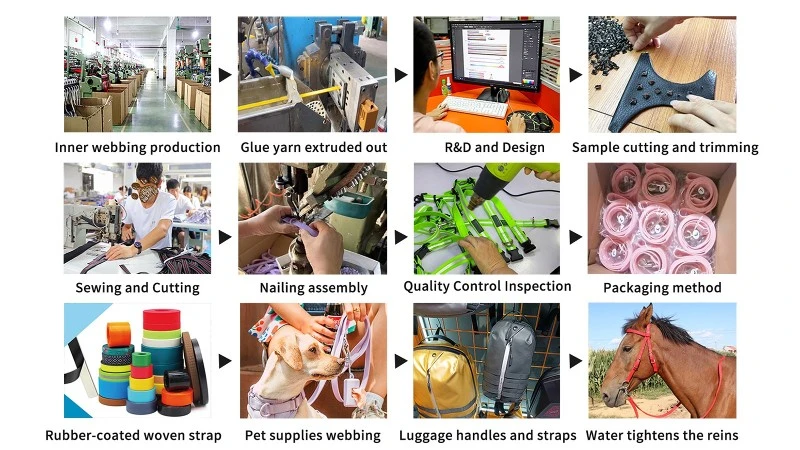
A typical custom pet product project may involve:
Specification confirmation → Quotation → Sample → Sample approval → Bulk production → QC → Packaging → Delivery
For manufacturers with integrated production capabilities, the process may also include internal material preparation, weaving, coating, cutting, printing, and hardware assembly.
For buyers, the key issue is consistency between the approved sample and the bulk order.
Before production starts, it is worth confirming the final quantity, approved specifications, materials, colors, packaging, production schedule, and any special quality requirements.
Clear confirmation at this stage reduces the possibility of misunderstandings during production.
Know What Will Be Checked During QC
Quality control should not begin only after the finished products are packed.
For custom dog leashes, buyers may want to understand how materials and finished products are checked throughout production.
At the incoming stage, materials such as webbing, coated materials, and hardware can be checked before entering production.
During manufacturing, dimensions, color, coating condition, stitching, printing, and assembly can be monitored.
Finished products can then be checked for appearance, specifications, functional details, and packaging before shipment.
GH Material uses an IQC → IPQC → FQC → OQC quality-control process covering incoming materials, production, finished products, and outgoing orders.
For buyers with specific inspection requirements, these requirements should be communicated before production rather than after the goods are completed.
Build the Purchase Around a Clear Process
A successful custom dog leash order usually depends on several decisions being confirmed in the right order.
Instead of discussing only the final product price, buyers should establish the product specification, customization requirements, material selection, MOQ, sample requirements, production schedule, and QC expectations before approving the bulk order.
A practical purchasing process can be summarized as:
Product Requirements → Specification Confirmation → Quotation → Sample Development → Sample Approval → Bulk Production → QC → Packaging & Delivery
This process gives both the buyer and manufacturer a clear reference for the project.
For pet brands, wholesalers, distributors, and private-label buyers, the goal is not simply to find a supplier that can produce a dog leash. It is to work with a manufacturer that can understand the product requirements and consistently reproduce the approved specification at scale.
If you are developing a custom dog leash and already have your target quantity, size, material, colors, logo, or packaging requirements, these details can be reviewed before production to determine the appropriate manufacturing solution.