

How Pet Product Quality Issues Affect Importer Costs
Nov 09, 2026
Leave a message
For pet product importers, supplier-related quality issues are not simply manufacturing problems. They can directly affect purchasing costs, inventory turnover, customer satisfaction, and overall profit margins.
A batch of dog collars with inconsistent stitching, leashes with defective hardware, or harnesses with incorrect dimensions may appear to involve relatively minor production defects. However, once these products reach a distributor's warehouse or retail supply chain, the financial consequences can become much larger.
Importers should therefore evaluate suppliers beyond their quoted unit prices. Understanding the total financial impact of quality problems helps purchasing teams make better sourcing decisions and build more sustainable supplier relationships.
1. Look Beyond the Direct Cost of Defective Products
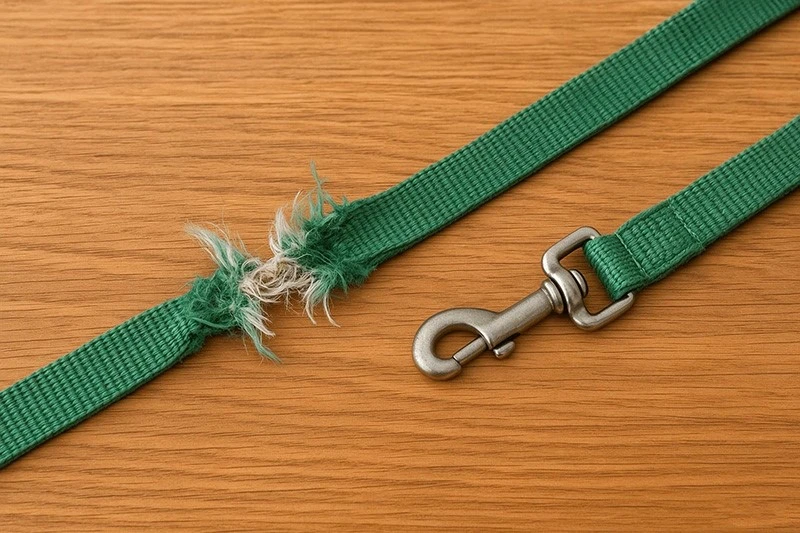
The most obvious financial loss comes from products that cannot be sold or used as originally intended.
For example, if an importer receives 2,000 dog leashes and 5% of the shipment has defective stitching or hardware, approximately 100 units may require replacement, rework, or disposal.
However, the purchase value of these 100 units represents only part of the loss.
Importers should also consider:
The cost of replacing defective products
Additional inspection and sorting expenses
Labor required for rework or repackaging
Freight costs for replacement shipments
Warehouse handling and inventory management expenses
A supplier's quality performance should therefore be evaluated according to the total cost of handling defective products, rather than the defect rate alone.
2. Calculate the Hidden Costs of Quality Problems
Some of the most significant financial consequences occur after products leave the factory.
When an importer discovers defects during warehouse inspection, additional resources may be needed to identify affected batches, separate usable inventory, and arrange corrective actions.
For customized dog collars, leashes, and harnesses, consistent product specifications and quality inspection are important for maintaining available inventory across different product sizes and colors.
For example:
Incorrect product dimensions may make certain sizes unsuitable for sale.
Inconsistent colors may create problems when matching existing product collections.
Defective buckles or D-rings may require component replacement or complete product rework.
Uneven coating on PVC or TPU webbing may affect appearance and product consistency.
Importers should estimate the financial impact across the entire process, including inspection, labor, storage, rework, and replacement.
A practical evaluation method is:
Total Quality-Related Cost = Direct Product Loss + Inspection and Rework Costs + Replacement Logistics + Additional Handling Costs
This approach provides a more realistic picture of supplier-related expenses.
3. Evaluate How Quality Problems Affect Inventory Turnover
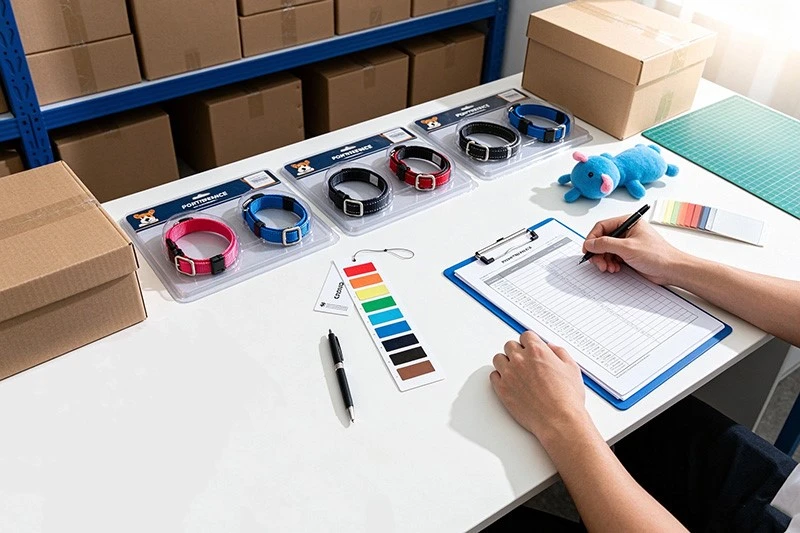
Quality issues can also reduce the amount of inventory available for sale.
When a shipment is placed on hold because of defects, importers may have to delay product distribution while waiting for inspection results or corrective action.
This can create several commercial problems:
Delayed replenishment for wholesale customers
Temporary stock shortages
Reduced inventory availability across product sizes and colors
Additional warehouse storage expenses
Missed sales opportunities during important selling periods
For importers managing multiple pet product SKUs, even a relatively small defect rate can disrupt inventory planning.
For example, if a shipment contains several collar sizes and colors, defects concentrated in one popular size may create a stock shortage even when the overall shipment quantity appears sufficient.
Therefore, buyers should evaluate quality issues not only by the number of defective units but also by their impact on sellable inventory.
Consider the Financial Impact on Customer Relationships
Supplier-related quality problems can extend beyond the importer's own warehouse.
When defective products reach distributors, retailers, or end customers, the importer may need to handle returns, replacements, customer complaints, and additional communication.
These activities create costs that are not always included in the original purchasing budget.
More importantly, repeated quality problems can affect customer confidence.
For private-label brands and wholesale businesses, inconsistent product quality may damage the reputation of an entire product line. Customers who experience problems with one batch may become less willing to place repeat orders.
Importers should therefore consider both measurable expenses and potential commercial losses when evaluating supplier performance.
A supplier that consistently delivers reliable products may help protect customer relationships and support long-term sales stability.
Compare Suppliers Using Total Purchasing Costs
The lowest quotation does not necessarily represent the most economical sourcing option.
Consider the following simplified example:
An importer compares two suppliers for a 2,000-piece dog collar order.
| Cost factor | Supplier A | Supplier B |
|---|---|---|
| Unit price | $3.00 | $3.15 |
| Order quantity | 2,000 | 2,000 |
| Purchase value | $6,000 | $6,300 |
| Defect rate (illustrative) | 5% | 1% |
| Defective units | 100 | 20 |
Supplier A offers a lower initial purchase price, saving $300 compared with Supplier B.
However, Supplier A produces 80 more defective units in this example.
If the average additional handling and replacement-related cost is assumed to be $5 per defective unit, the additional quality-related expense is $400.
Under this simplified assumption, Supplier A's apparent $300 purchasing advantage is outweighed by the additional $400 quality-related expense.
This example does not represent actual supplier performance. It demonstrates why importers should compare purchasing costs and quality-related expenses together.
A more useful supplier evaluation should include unit price, historical defect rates, corrective-action costs, replacement arrangements, and delivery reliability.
Use Quality Performance Data to Improve Future Purchasing Decisions
Importers should avoid evaluating suppliers based on a single shipment or isolated production incident.
Instead, they should maintain quality records across multiple orders.
Useful indicators include:
Incoming defect rate
Product rejection rate
Rework and replacement frequency
Customer complaint rate
On-time delivery performance
Repeat quality issues by product or component
For pet products, it is also useful to record defects by product category and component.
For example, recurring issues involving leash hooks, collar buckles, harness adjustment points, or coated webbing surfaces may indicate areas requiring closer attention.
Comparing these records over time helps buyers identify whether a supplier is improving, maintaining consistent performance, or repeatedly creating additional costs.
The information can also support more objective supplier negotiations and purchasing decisions.
Establish Financially Measurable Quality Expectations Before Bulk Orders
A practical way to reduce unexpected costs is to establish clear quality requirements before production begins.
Importers should confirm product specifications, acceptable tolerances, component requirements, inspection criteria, and packaging conditions.
For customized pet products, approved samples and documented specifications are particularly important because small changes in materials, dimensions, hardware, or construction can affect the final product.
Buyers should also clarify how defective products will be handled, including responsibilities for rework, replacement, and associated costs.
These agreements help both parties understand their responsibilities before problems occur.
For manufacturers, consistent inspection and production controls are equally important for reducing avoidable defects and maintaining reliable bulk-order performance.
Conclusion
Supplier-related quality issues should be treated as a financial risk, not simply a manufacturing inconvenience.
For pet product importers, the real cost of poor quality may include defective inventory, additional labor, replacement logistics, delayed sales, and weakened customer relationships.
Evaluating suppliers through total purchasing costs and historical quality performance provides a more accurate basis for sourcing decisions.
Rather than choosing a supplier solely because of a lower quotation, importers should look for manufacturing partners that can deliver consistent products, manage corrective actions effectively, and support stable repeat orders.
Looking for a pet product manufacturing partner?
GH Material supplies customized pet collars, leashes, harnesses, and related pet products for overseas B2B buyers. Contact our team to discuss your product specifications, OEM/ODM requirements, and bulk purchasing needs.
Frequently Asked Questions
Q: What Is The Most Important Financial Indicator When Evaluating Supplier Quality?
A: The total quality-related cost is particularly useful because it includes direct product losses, inspection, rework, replacement logistics, and other expenses associated with defective products.
Q: Should Importers Reject A Supplier Because Of One Defective Shipment?
A: Not necessarily. Buyers should investigate the cause, evaluate the severity of the issue, review corrective actions, and compare performance across multiple orders before making a long-term sourcing decision.
Q: How Can Importers Reduce Financial Risks When Sourcing Customized Pet Products?
A: They can establish documented specifications, approve production samples, define inspection requirements, monitor incoming quality, and agree on corrective-action responsibilities before placing bulk orders.