

How Should Brands Specify Webbing Reinforcement For Padded Dog Harnesses?
Nov 28, 2026
Leave a message
Padded dog harnesses create an additional manufacturing challenge: the soft outer materials that improve product appearance and cushioning are not necessarily suitable for carrying leash loads.
For pet brands developing premium harness collections, this distinction matters. A harness may combine mesh, neoprene, foam padding and polyester fabric, but its ability to withstand pulling forces depends heavily on how the structural webbing is integrated into the finished construction.
The challenge for OEM buyers is not simply choosing a comfortable outer material. It is making sure the reinforcement structure works with the padding, stitching and hardware as one complete product.
Separate the Cushioning Layer From the Load-Bearing Structure
Padded harnesses commonly combine two different functional systems.
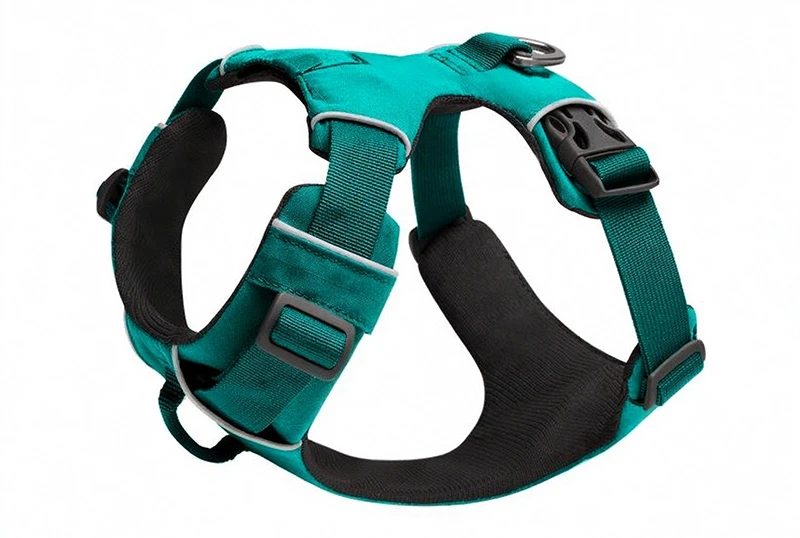
The cushioning layer provides the contact surface against the dog's body. Depending on the design, it may include air mesh, neoprene, foam or other textile materials.
The load-bearing structure transfers pulling forces from the leash attachment point through the harness and around the body.
These functions should not automatically be assigned to the same material.
For example, a mesh panel may provide ventilation and a soft contact surface, but it should not be assumed to provide sufficient structural strength for the leash attachment.
For product developers, the first decision is to establish which components provide cushioning and which components carry mechanical loads.
This distinction helps prevent a common development mistake: selecting attractive padding materials first and attempting to solve structural reinforcement later.
For brands developing a new harness collection, our custom dog harness manufacturing service supports customization of webbing, materials, hardware and stitching requirements.
Map the Load Path Before Finalizing the Harness Pattern
A harness should be evaluated as a connected structure rather than a collection of individual fabric panels.
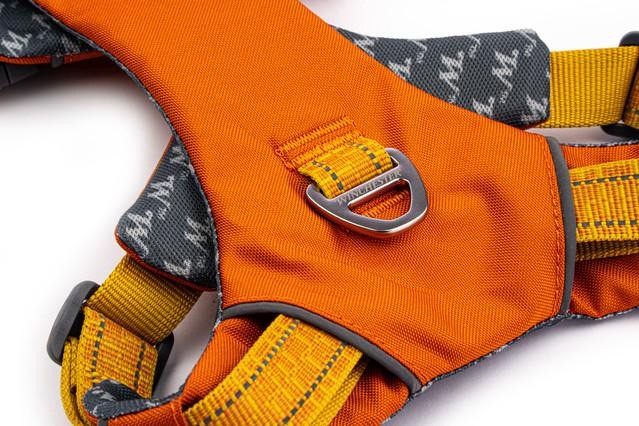
When a dog pulls against the leash, force enters through the attachment hardware and transfers into the surrounding webbing and reinforced sections.
The exact load path depends on the harness design.
For an overhead harness, the attachment area may connect to several webbing sections around the back and body. Other constructions may distribute forces through different strap arrangements.
During development, buyers and manufacturers should identify:
Where the leash attachment hardware is installed
Which webbing sections transfer the pulling force
Where the webbing connects to the padded body panels
Which stitching areas experience concentrated loading
Whether adjustment components introduce additional movement or stress
The objective is to ensure that the reinforcement system remains connected throughout the structure.
Simply adding a stronger piece of webbing around the attachment point does not guarantee that the surrounding construction can withstand the same loading conditions.
Choose Reinforcement Webbing According to Its Function
Not every webbing section needs the same specification.
A harness may contain several webbing components with different responsibilities.
The main structural webbing may need to support the primary load path. Secondary reinforcement may stabilize attachment areas, while adjustment straps need to maintain their position during normal use.
When specifying webbing, manufacturers and buyers should consider:
Width and thickness
The dimensions should match the harness construction, available hardware and intended application. Excessive thickness can make assembly difficult, while unsuitable dimensions may create poor connections between components.
Material construction
Polyester or nylon webbing may be considered depending on the required mechanical properties and product design. For selected harness designs, PVC or TPU coated webbing may also be evaluated where its surface characteristics and maintenance advantages are relevant.
Flexibility
The webbing must work with the shape of the harness. Material that is too stiff can create difficulties around curved sections and connection points.
Surface and edge characteristics
The webbing should be compatible with the surrounding fabric and stitching process. Its surface should not create unnecessary friction or damage adjacent materials during repeated movement.
These specifications should be confirmed according to the finished harness design rather than selected independently.
Pay Attention to the Connection Between Webbing and Padding
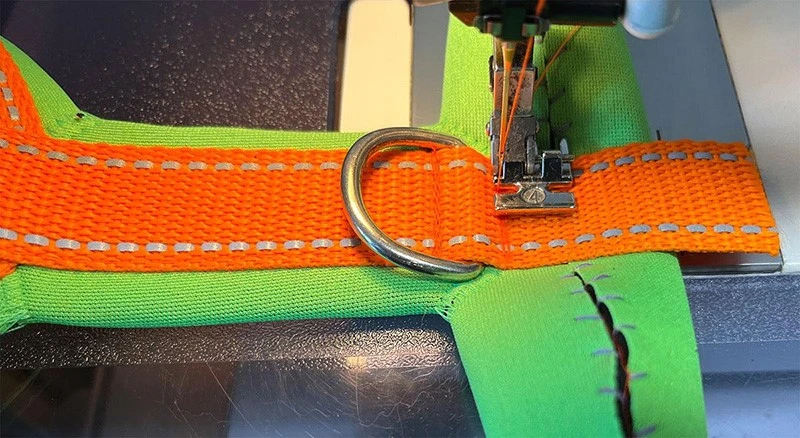
The interface between structural webbing and padded panels is one of the most important areas during product development.
Several construction issues deserve attention.
First, the webbing should be positioned consistently within the intended reinforcement structure. Uncontrolled movement can affect the alignment of the finished product.
Second, stitching must connect the appropriate structural components. Sewing only through a soft outer layer may not provide the intended reinforcement.
Third, transitions between padded and non-padded sections should be considered carefully. Differences in thickness can affect sewing accuracy, material positioning and finished appearance.
Finally, hardware installation should be evaluated together with the surrounding webbing. A strong buckle or D-ring cannot compensate for an unsuitable attachment construction.
These details are especially important when developing lightweight harnesses that combine multiple materials.
These production processes are supported by our in-house pet product manufacturing capabilities.
Test the Complete Harness, Not Just the Webbing
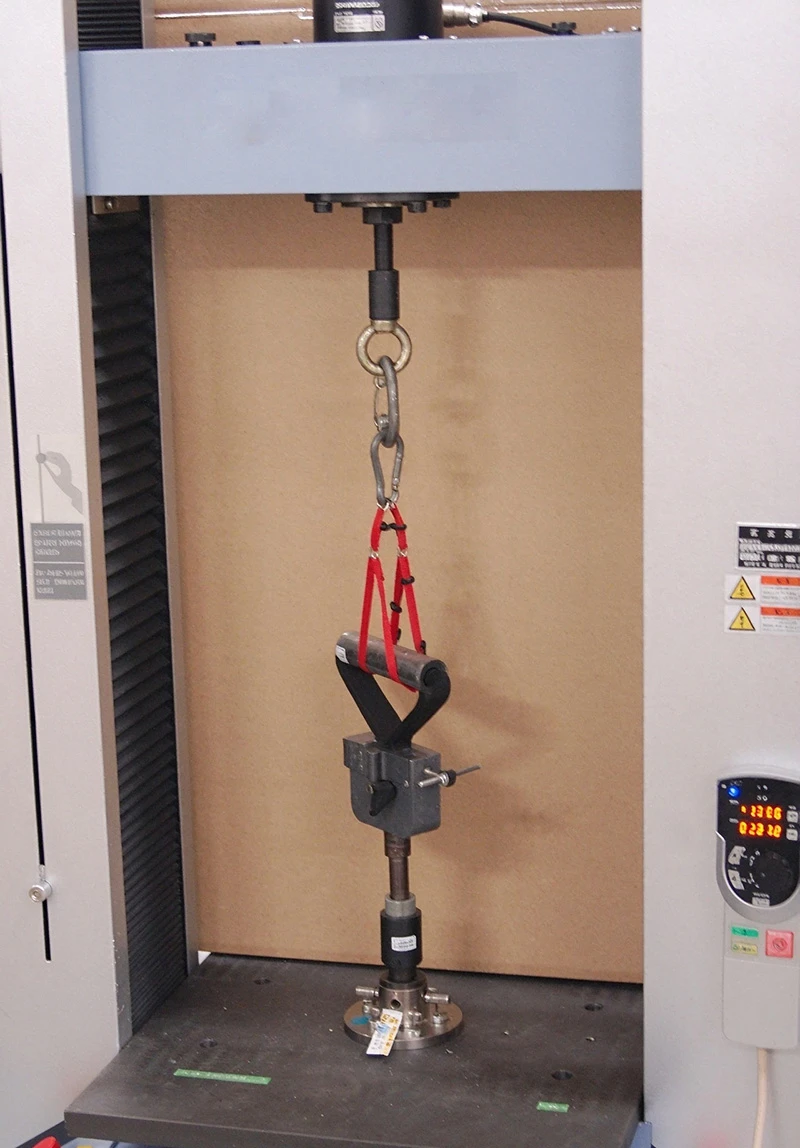
A webbing tensile test provides useful information about the material itself, but it does not establish the strength of the finished harness.
The final product contains multiple potential failure points, including stitching, hardware connections, adjustment components and reinforced panels.
A practical validation program should therefore include several levels of evaluation.
Material verification
Confirm the selected webbing dimensions, material characteristics and relevant tensile properties against the approved specification.
Connection inspection
Check stitching patterns, reinforcement coverage, hardware installation and the relationship between webbing and padded sections.
Assembly testing
Evaluate the finished harness under loading conditions appropriate to its intended application. Observe whether stitching, attachment points or adjustment components show signs of failure or movement.
Repeated-use evaluation
Consider repeated loading, adjustment and relevant environmental conditions, such as moisture exposure or cleaning, where these reflect the intended product use.
Testing requirements should be established according to the product category, target dog sizes and applicable market requirements. Buyers should not treat a material-level strength result as proof of complete product safety.
Define Reinforcement Requirements Before Bulk Production
For private-label brands, reinforcement decisions should be included in the approved product specification rather than left to informal factory interpretation.
A useful development specification should identify:
Structural webbing material, width and thickness
Reinforcement locations and dimensions
Stitching requirements at key connections
Hardware type and attachment construction
Padding and outer fabric materials
Required finished-product validation procedures
Reference samples, construction drawings and photographs can help manufacturers understand the intended design.
Any changes to the webbing, padding thickness, stitching or hardware should also be reviewed for their effect on the finished construction.
This is particularly important when developing multiple harness sizes. A design that works for one size should not automatically be assumed to perform identically across every size configuration.
Developing Padded Dog Harnesses With the Right Manufacturing Structure
Premium padded harnesses require coordination between soft materials, structural webbing, stitching and hardware.
For OEM and private-label buyers, the important development decision is to establish how these components work together before approving the final construction.
GH Material manufactures custom dog harnesses, collars and leashes, supported by in-house PVC and TPU coated webbing production.
Our manufacturing capabilities allow buyers to discuss webbing specifications, material selection, hardware configurations and finished-product construction within one manufacturing system.
If you are developing a padded dog harness or planning a new private-label harness collection, share your design drawings, reference samples or initial specifications with our team.
Contact GH Material to discuss your custom pet product OEM/ODM project.