

How Can Brands Prevent Adjustable Dog Collars from Slipping During Use?
Nov 28, 2026
Leave a message
An adjustable dog collar must maintain its selected length after repeated use. However, a collar that fits correctly during initial inspection may gradually loosen if the webbing moves through its adjustment hardware.
For pet product brands, this creates more than a minor construction problem. An adjustable collar that cannot maintain its circumference may affect product reliability, customer satisfaction and the perceived quality of an entire collection.
The cause is not necessarily a defective buckle. Slippage can result from the interaction between webbing thickness, surface friction, adjuster geometry and the way the strap passes through the hardware.
Understanding these relationships helps buyers specify adjustable collars more accurately before approving bulk production.
Understand Why Webbing Slips Through Adjustment Hardware
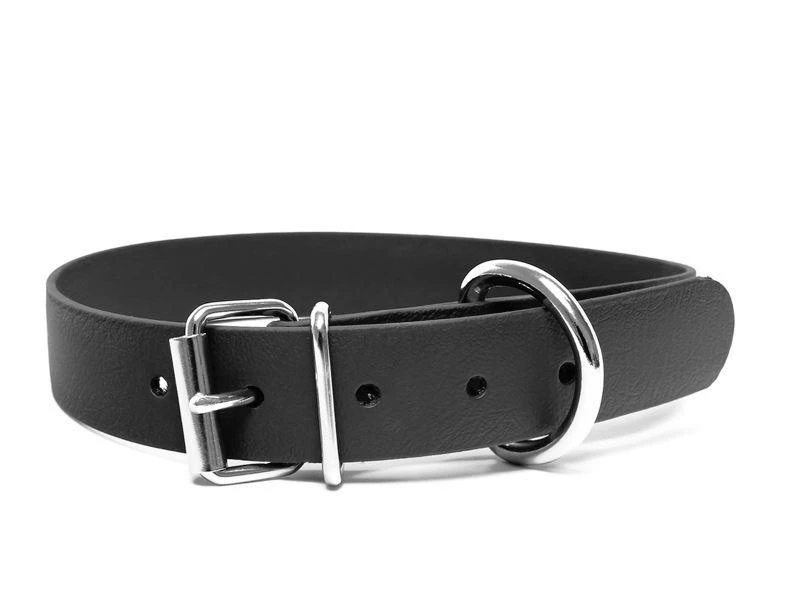
Most adjustable dog collars use a slide adjuster that allows the webbing to move when the wearer changes the collar circumference.
The adjuster must provide enough movement for intentional adjustment while maintaining sufficient resistance against unwanted movement.
Several factors influence this balance.
Surface friction
The surface characteristics of the webbing affect how it contacts the adjuster's crossbars. Different coatings, textile structures and surface finishes can create different friction conditions.
A smoother surface may require a different adjuster configuration from a conventional woven nylon strap.
Webbing thickness
The finished thickness determines how the webbing fits inside the adjuster. If the strap is too thin for the hardware, the contact may be insufficient to resist movement. Excessive thickness, on the other hand, can make adjustment difficult.
Repeated loading
A collar experiences repeated movement and changes in tension during normal use. An adjustment system that appears stable when stationary may behave differently after repeated loading.
A published patent describing a pet collar slide adjuster specifically identifies repeated loading and low-friction strap materials as potential causes of slippage.
For OEM buyers, this demonstrates why the webbing and adjuster should be evaluated as a matched assembly rather than as independent components.
For brands developing waterproof and adjustable collar collections, our PVC coated webbing dog collars provide a reference for finished-product materials and hardware configurations.
Match the Adjuster Structure to the Webbing
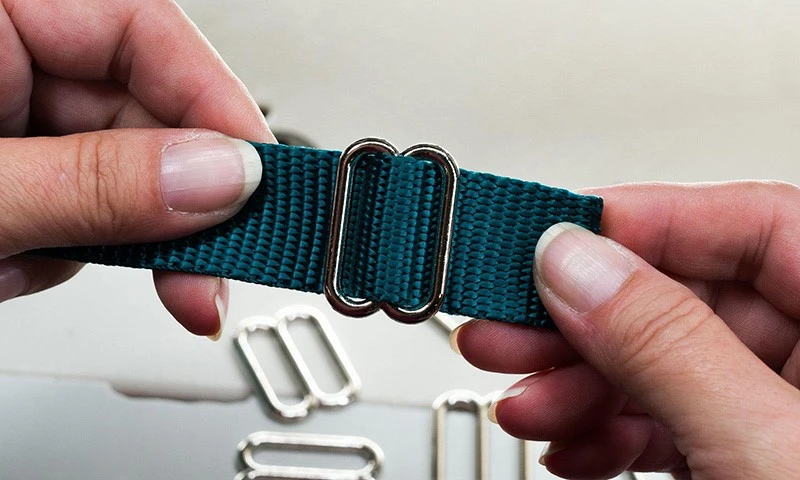
Selecting an adjuster based only on its nominal width is not sufficient.
Two adjusters with the same nominal opening may have different internal structures and contact characteristics.
Important design considerations include:
Crossbar geometry
The crossbars determine how the strap bends and changes direction as it passes through the adjuster. Their dimensions and arrangement influence how the webbing contacts the hardware.
Surface texture
Some adjusters incorporate ridges or textured contact surfaces to increase resistance against strap movement.
However, the effectiveness of these features depends on the webbing construction and the complete threading arrangement.
Opening dimensions
The internal opening should accommodate the actual finished webbing dimensions, including its coating thickness where applicable.
Hardware material and rigidity
The adjuster should maintain its intended geometry under the loads expected in the finished product. Deformation can change the contact conditions between the hardware and strap.
Brands should therefore confirm adjuster compatibility using the actual production webbing rather than relying exclusively on component catalog dimensions.
Consider How Coated Webbing Changes the Adjustment Interface
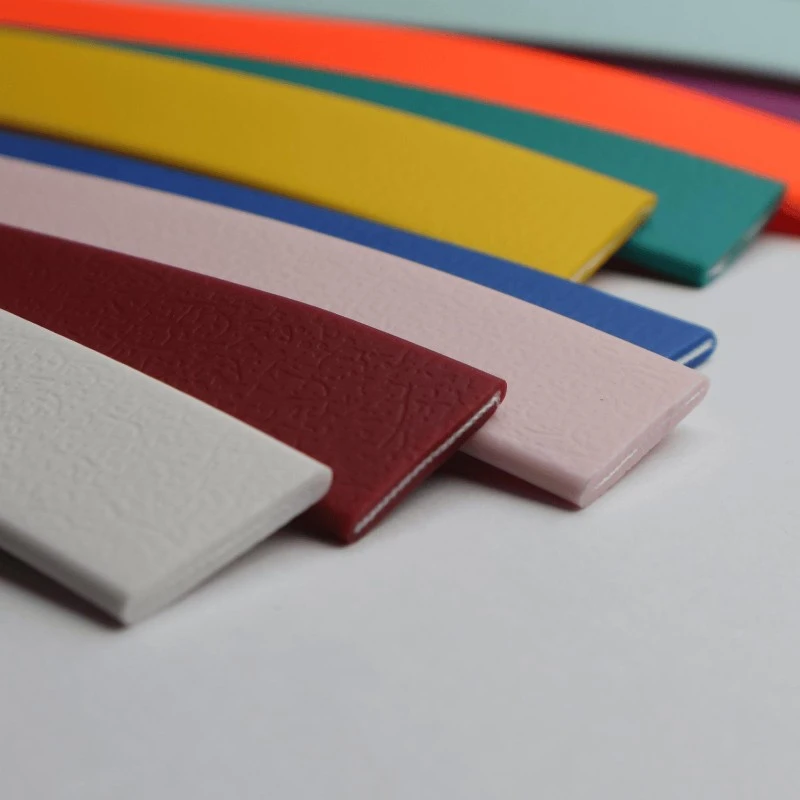
PVC and TPU coated webbing provide different surface characteristics from conventional woven polyester or nylon straps.
For dog collar development, these differences deserve attention when selecting adjustment hardware.
PVC coated webbing provides a protective polymer surface that is generally easy to clean and suitable for products requiring reduced water absorption.
TPU coated webbing offers another material option, with specifications that can be adjusted according to the intended application.
However, buyers should not assume that every coated webbing specification will work with every slide adjuster.
The following details should be considered together:
Finished webbing width and thickness
Coating surface characteristics
Webbing flexibility
Adjuster opening dimensions
Crossbar contact geometry
Strap threading arrangement
For example, changing from conventional woven webbing to a coated version may alter the finished strap thickness and its interaction with the adjustment hardware.
A component combination that worked with the original material may therefore require further evaluation after the material changes.
Explore our PVC coated webbing materials for dog collars, including available widths, thicknesses and material specifications.
Check the Strap Threading Path
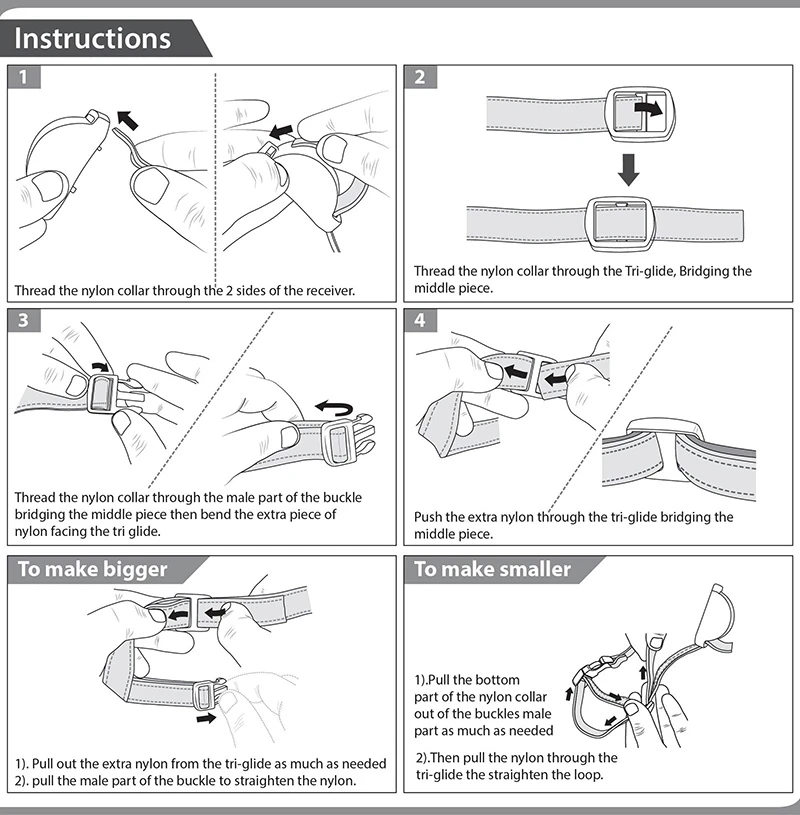
Even compatible materials and hardware can produce an unreliable adjustment system if the webbing is threaded incorrectly.
The strap must follow the intended path through the adjuster so that the required contact and friction are maintained.
During product development, buyers should verify:
Correct strap direction
The webbing should pass through the adjuster according to its intended design. Reversing the component or threading the strap incorrectly may reduce its holding performance.
Full contact with the crossbars
The strap should sit properly against the intended contact surfaces rather than twisting or folding unexpectedly.
Strap alignment
The webbing should remain flat when adjusted. Twisting or uneven folding can change the contact conditions and create inconsistent adjustment behavior.
Free-end positioning
The remaining strap length should be sufficient to maintain the intended threading arrangement throughout the approved adjustment range.
A production sample should be reviewed from both sides because some threading errors are difficult to identify from the finished product's front appearance alone.
Validate Adjustment Retention on the Finished Collar
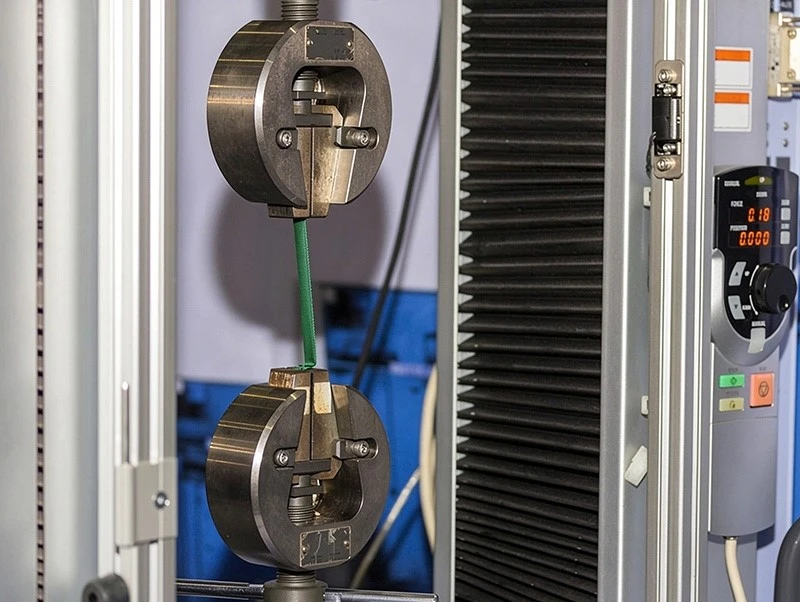
A component inspection cannot establish whether a complete collar will maintain its adjusted length.
The most useful validation takes place on the assembled product using the actual webbing, adjuster and construction method.
A practical development evaluation can include:
Initial adjustment
Set the collar to its intended circumference and confirm that the adjuster moves smoothly when deliberate adjustment is required.
Static retention
Apply a defined load appropriate to the product specification and observe whether the webbing moves through the adjuster.
Repeated loading
Repeat loading and unloading to identify gradual movement that may not appear during a single inspection.
Adjustment cycling
Move the collar through its intended adjustment range several times and check whether the hardware maintains consistent positioning.
Post-test inspection
Inspect the webbing surface, adjuster contact areas and surrounding construction for deformation, damage or abnormal movement.
Testing conditions should be defined according to the intended collar design, target dog sizes and applicable product requirements. These evaluations should not be presented as a substitute for complete finished-product safety validation.
The important point is to evaluate adjustment retention as a separate functional requirement rather than assuming that a strong buckle or a visually acceptable sample guarantees reliable performance.
Include Adjustment Retention in the Product Specification
For private-label brands, adjustment performance should be documented before bulk manufacturing.
A useful specification should include:
Webbing material and construction
Finished width and thickness
Coating type and relevant surface characteristics
Adjuster dimensions and design
Approved strap threading configuration
Intended adjustment range
Adjustment retention evaluation requirements
If a manufacturer proposes changing the webbing or adjustment hardware, the new combination should be reviewed before production approval.
This is especially important when the same collar design is developed in several sizes. Different webbing dimensions or hardware sizes may change the interaction between the strap and adjuster.
Confirming these details early helps brands avoid approving a sample that looks correct but does not maintain its adjustment reliably.
Developing Reliable Adjustable Dog Collars With the Right Materials
An adjustable dog collar is a combination of webbing, hardware and product construction. Its adjustment performance depends on how these components interact, not simply on the quality of an individual buckle.
For pet brands developing private-label collars, matching the webbing specification with the slide adjuster is an important part of product engineering.
GH Material manufactures PVC and TPU coated webbing and custom pet products, including dog collars, leashes and harnesses.
With in-house coated webbing production and finished pet product manufacturing, we can coordinate material specifications, webbing dimensions and product construction for OEM and ODM projects.
If you are developing an adjustable dog collar collection, share your product drawings, reference samples or material requirements with our team.
Contact GH Material to discuss your custom pet product manufacturing project.