


How Should Pet Brands Develop Dog Harnesses for Different Body Shapes
Nov 28, 2026
Leave a message
How Should Pet Brands Develop Dog Harnesses for Different Body Shapes?
A dog harness that fits one breed or body type may not fit another equally well, even when both dogs fall within the same weight range.
For pet brands developing private-label harness collections, this creates an important product-development challenge: how can a harness range accommodate different body proportions without creating an unnecessarily complicated product line?
Weight-based sizing alone does not always provide enough information. Two dogs with similar body weights can have different chest proportions, neck dimensions and body lengths. If these differences are not considered during product development, a harness may be difficult to position correctly or adjust consistently.
For wholesale buyers, the objective is to develop a commercially practical size range that accounts for real differences in dog body shapes.
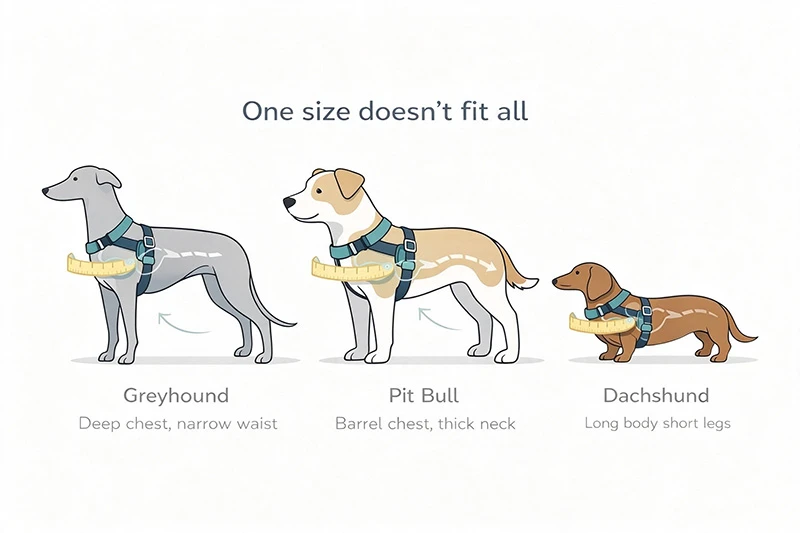
Why Weight-Based Sizing Can Be Insufficient
Weight is convenient for communicating product sizes, but it is not a direct measurement of body proportions.
Consider two dogs that weigh approximately the same amount. One may have a relatively broad chest and short body, while the other may have a narrower chest and longer body.
A harness designed around weight alone may not accommodate both comfortably.
This matters when brands develop products for different breed groups or target markets. A size chart that appears straightforward on paper may produce inconsistent fit across the actual customer base.
For product developers, the first step is to distinguish between body weight as a general size reference and physical measurements as the basis for harness dimensions.
Develop the Size Range Around Measurable Dimensions
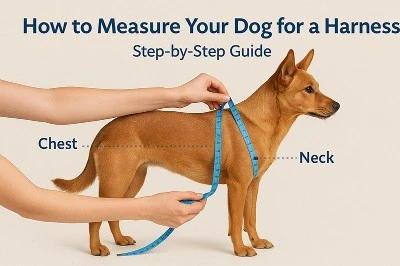
A commercial harness size range should use measurements that directly relate to the product's fit.
Common reference measurements include:
Chest girth
Neck circumference, where relevant to the design
Distance between the front legs
Body length or back length, depending on the harness structure
These measurements help product developers understand whether the harness dimensions are suitable for the intended size category.
However, adding more measurements does not automatically create a better size chart. Each measurement should have a clear relationship with the harness construction.
For example, a measurement that does not affect the position or adjustment of a particular harness design may not need to become a separate sizing criterion.
The goal is to create a practical measurement system that buyers, product teams and manufacturers can use consistently.
Avoid Treating Every Size as a Simple Enlarged Version
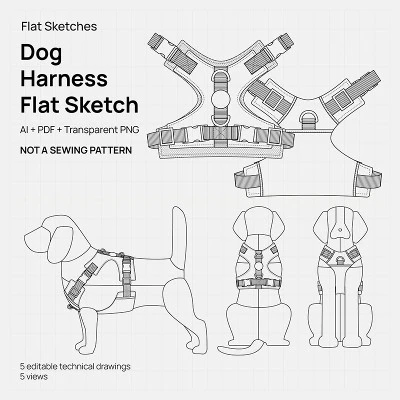
One common product-development mistake is to scale all harness dimensions proportionally from a single base size.
This approach assumes that dogs of different sizes have identical body proportions. In reality, body shapes do not always change in direct proportion to overall size.
A larger harness may therefore need more than longer straps.
Depending on the design, product developers may need to review:
The relationship between chest and neck dimensions
The position of adjustment points
The proportions of different strap sections
The dimensions of the connecting components
The overall balance of the harness structure
These decisions should be evaluated for each size category rather than automatically copied from the smallest or largest sample.
For a brand developing several sizes, this can help avoid a collection in which the smallest size works well but the larger sizes require substantial adjustment.
Use Representative Samples to Validate the Size Range
Developing a size chart is only one part of harness development. The proposed dimensions also need to be evaluated against representative body measurements.
A useful development approach is to select representative measurements for each size category and use them to review the corresponding product sample.
This helps identify situations where:
The adjustment range is insufficient.
The harness dimensions are disproportionate.
The adjustment points do not provide the intended range of movement.
The same size category covers body shapes that are too different for one design.
For B2B brands, the purpose is not to test every possible dog body shape individually. It is to determine whether the proposed size range provides a reasonable fit across the intended measurement range.
Any changes identified during sample evaluation should be reflected in the confirmed product specifications.
Consider the Commercial Impact of Too Many Sizes
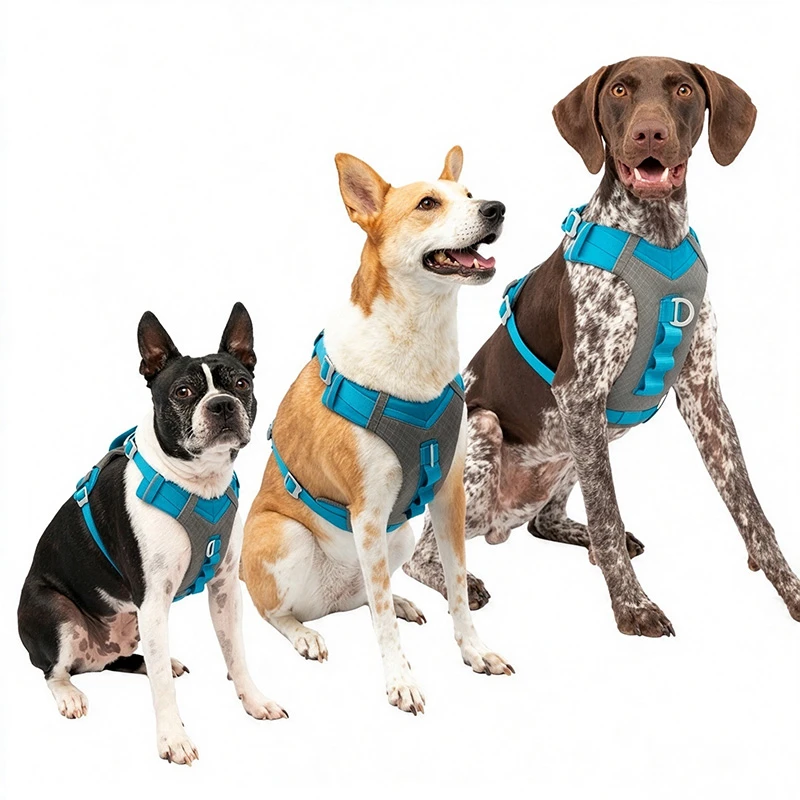
A very broad size range may appear attractive because it promises to serve more customers. However, every additional size can increase the complexity of a wholesale product program.
For importers and distributors, more sizes may mean:
More individual SKUs to manage
Smaller quantities per size
More complicated inventory planning
Additional product samples and development work
Greater difficulty maintaining stock availability across the range
On the other hand, offering too few sizes may exclude important body types or create a poor fit across the intended market.
The commercial objective is to find a balance between fit coverage and manageable product assortment.
Brands should therefore evaluate proposed sizes using both measurement differences and expected order demand. A size should have a clear purpose within the product range rather than being added simply to make the size chart appear more comprehensive.
Confirm Size Specifications Before Bulk Production
Once the size range has been evaluated, the confirmed specifications should be documented clearly.
For each size, buyers and manufacturers should have an agreed reference for:
Finished harness dimensions.
Applicable adjustment ranges.
Strap dimensions and component positions.
Hardware specifications.
Approved sample and measurement tolerances.
This provides a consistent reference for subsequent production and helps prevent different interpretations of the same size specification.
If a brand later decides to introduce another size, the new specification should be evaluated in relation to the existing range rather than developed independently.
This is particularly important for private-label buyers who intend to maintain the same harness design across multiple purchasing cycles.
Develop Harness Collections With Manufacturing in Mind
A commercially successful harness collection needs to balance body-shape coverage, practical size options and manufacturable product specifications.
For manufacturers, this means understanding how dimensions, strap configurations, hardware and adjustment requirements work together in the finished product.
GH Material manufactures customized dog harnesses, collars and leashes for overseas B2B buyers. Harness projects can be discussed around product structure, dimensions, colors, materials, hardware and branding requirements.
For brands planning a new harness collection or expanding an existing size range, GH Material can review the proposed product specifications and discuss OEM/ODM manufacturing requirements.
Planning a custom dog harness collection? Contact GH Material with your reference samples, size chart or product drawings to discuss your project.