

Can PVC and TPU Coated Webbing Be Recycled?
Nov 16, 2026
Leave a message
Can Coated Webbing Be Recycled? What Pet Product Buyers Should Understand About Material Combinations
Sustainability is becoming an increasingly important consideration for pet product brands and importers. As businesses review the environmental impact of their product ranges, material durability, product lifespan, packaging, and end-of-life disposal are receiving more attention.
Coated webbing is widely used in dog collars, leashes, harnesses, and other accessories because it combines a textile base with a polymer coating. However, this multi-material construction can create challenges when a finished product reaches the end of its useful life.
For buyers sourcing PVC or TPU coated webbing, understanding these challenges is important. A material should not be described as recyclable simply because one of its components can be processed separately.
Why Is Coated Webbing More Difficult to Recycle Than Single-Material Textiles?
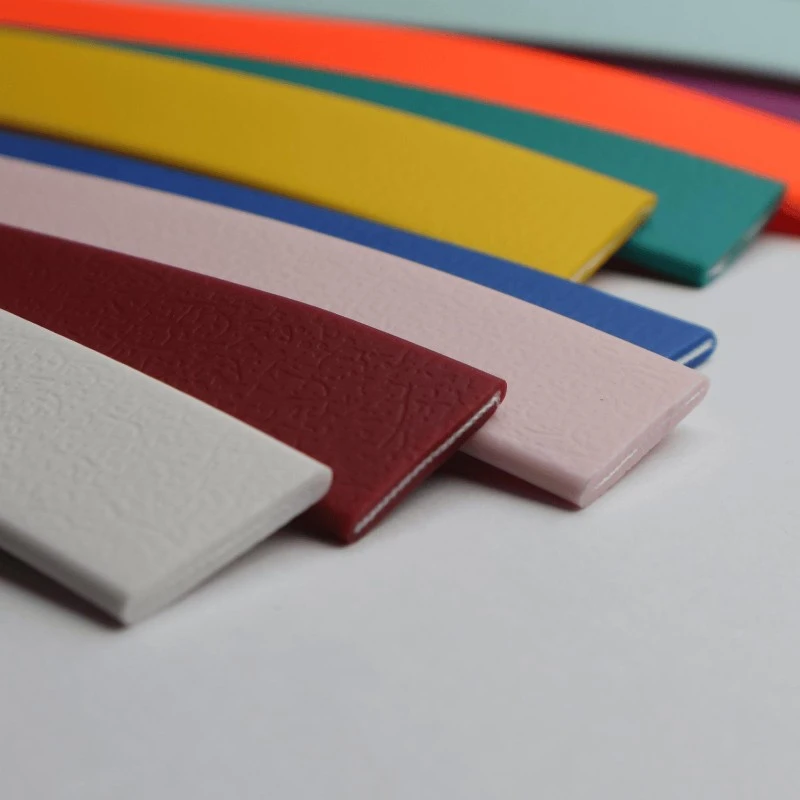
Coated webbing typically contains at least two main components:
A woven textile base, commonly polyester or nylon
A polymer coating, such as PVC or TPU
These components serve different functions. The textile base provides the underlying structure, while the coating contributes surface properties and resistance to environmental exposure.
The challenge is that the materials are bonded together during manufacturing. Separating them after use may require additional processing.
Research on coated textiles identifies coatings, adhesives, mixed fibers, and surface treatments as factors that can complicate conventional textile recycling. The difficulty depends on the specific material construction and the recycling technology available.
Therefore, buyers should distinguish between a product containing recyclable raw materials and a finished product that can actually be collected, separated, and recycled through an available process.
Consider the Entire Product, Not Just the Webbing

A finished dog collar or leash is rarely made from coated webbing alone.
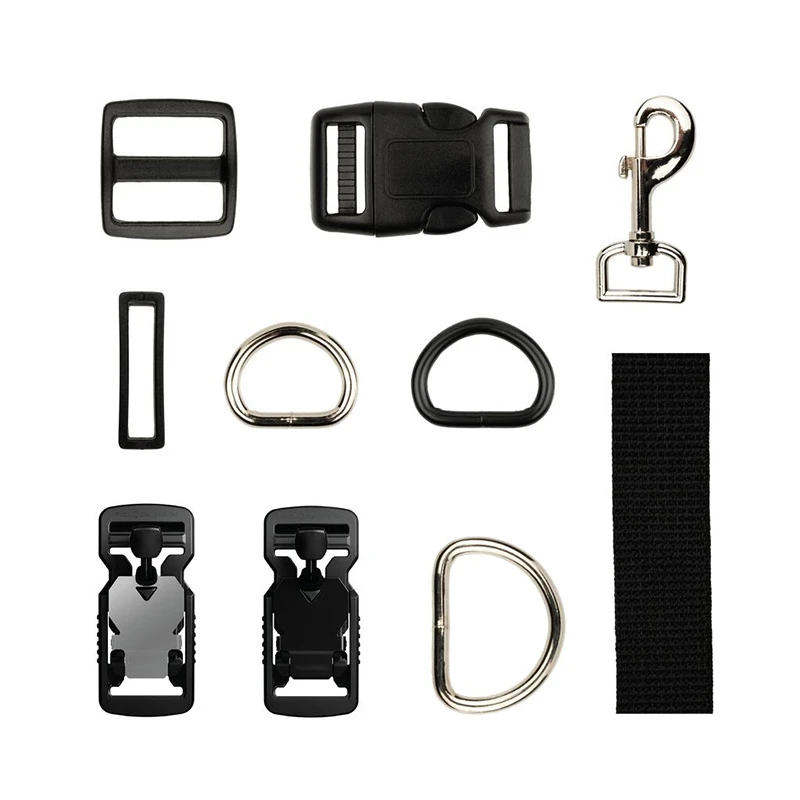
These material combinations are common in custom dog collars and other pet accessories, where webbing, hardware, and adjustment components work together:
PVC or TPU coated webbing
Metal D-rings and buckles
Plastic adjustment components
Sewing thread
Labels and decorative elements
Packaging materials
Each component may require a different recycling or disposal route.
For example, metal hardware may be recoverable through an appropriate metal recycling stream, but it usually needs to be separated from the textile and polymer components first.
Similarly, a plastic buckle cannot automatically be recycled together with a coated textile strap. Material identification and local recycling infrastructure determine whether separate recovery is practical.
For product developers, this means that recyclability should be evaluated at the finished-product level rather than based on one material specification.
Understand the Role of PVC and TPU Coatings

PVC and TPU are different polymer materials, and their processing and recycling routes should not be assumed to be identical.
The presence of a coating can complicate the recovery of the underlying textile, particularly when the coating is difficult to separate or when the recycling facility is not equipped to process composite materials.
Research into coated textile recycling has demonstrated that specialized separation methods may be technically possible for certain constructions. However, a laboratory process does not automatically mean that a commercial recycling route is widely available for finished pet accessories.
Buyers should therefore avoid relying on broad claims such as:
All coated webbing is recyclable.
TPU products are automatically environmentally friendly.
PVC products cannot be recovered under any circumstances.
A recyclable raw material makes the finished collar or leash recyclable.
A more reliable approach is to request material composition information and verify whether an appropriate collection and processing route exists in the target market.
When developing dog leash products, buyers should also consider how hardware and webbing components are assembled and whether they can be separated after use.
Design Pet Accessories With Easier Component Separation in Mind
Although not every coated webbing product can be designed for straightforward recycling, some design decisions may make end-of-life handling easier.
Product developers can consider:
Reducing unnecessary material combinations
Avoid adding decorative or functional materials that do not provide meaningful value to the finished product.
Considering removable hardware
Where the product design allows, detachable buckles, rings, and other metal components can make material separation more practical.
Reviewing labels and attachments
Labels, adhesives, and decorative additions should be considered as part of the complete product construction.
Documenting material composition
A clear component list helps downstream handlers understand what materials are present and whether separate recovery is possible.
These measures do not guarantee recyclability, but they can improve material identification and make future recovery options easier to evaluate.
Balance Product Durability With End-of-Life Considerations
A product designed for a longer useful life may reduce the frequency of replacement. However, durability and recyclability are different considerations.
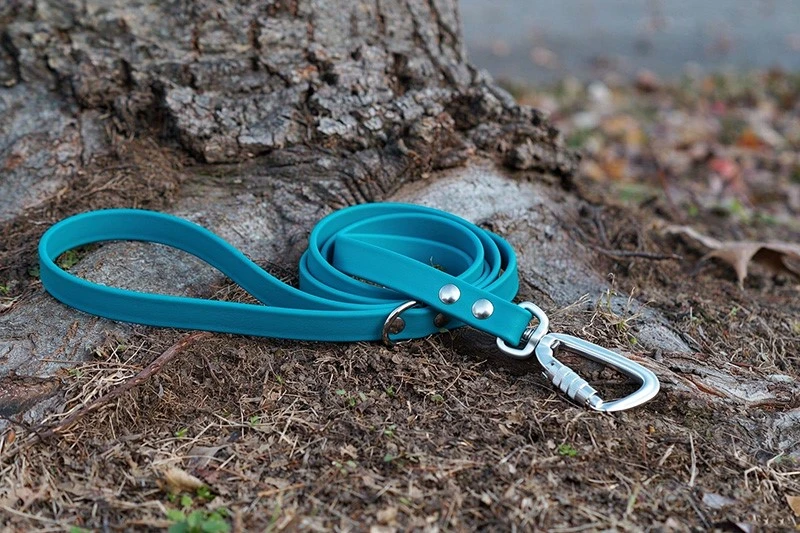
For example, a coated webbing dog leash may be selected for its surface performance and resistance to regular use. Its long service life may be valuable to the buyer, but that alone does not establish whether the product can be recycled after use.
Pet product brands should consider both questions:
How long can the product remain functional under its intended conditions?
What practical options exist when the product is no longer usable?
The answers may vary by product category, material construction, and market.
A useful product development strategy is to avoid making environmental claims based on a single attribute. Instead, brands should evaluate material use, product lifespan, repairability, component separation, and available end-of-life infrastructure together.
What Should B2B Buyers Ask Before Developing a New Product?
Importers and private label brands can include end-of-life considerations in their product development discussions.
The following questions can help:
| Area | Questions to Discuss |
|---|---|
| Material composition | What materials are used in the webbing and coating? |
| Product construction | Which components are permanently attached? |
| Hardware | Can metal or plastic parts be separated? |
| Product lifespan | Which parts are most likely to require replacement? |
| Material documentation | Can the supplier provide material information for the main components? |
| End-of-life options | Are suitable collection or recycling facilities available in the target market? |
| Environmental claims | Is there evidence supporting any recyclability or recycled-content claim? |
These questions are particularly useful when developing new product ranges for markets where retailers or consumers increasingly request environmental information.
Buyers should also distinguish between recycled content, recyclability, biodegradability, and product durability. They describe different characteristics and should not be used interchangeably.
Conclusion
Coated webbing can offer practical performance benefits for pet accessories, but its multi-material construction may create challenges at the end of a product's useful life.
For pet product importers and brands, evaluating recyclability requires more than identifying the textile base or polymer coating. The complete product construction, attached hardware, available separation methods, and local recycling infrastructure all matter.
When developing new dog collars, leashes, and harnesses, buyers should request clear material information and consider component separation during the design stage. Environmental claims should only be made when supported by appropriate technical evidence.
GH Material supplies PVC and TPU coated webbing and finished pet products for overseas B2B customers. Buyers can discuss material composition, product construction, and customized development requirements with our team when planning a new product range.
Contact GH Material to Discuss Your Pet Product and Coated Webbing Requirements.
FAQ
Q: Is PVC coated webbing recyclable?
A: Its recyclability depends on the material construction and the recycling technology available. The presence of a PVC coating can complicate the recovery of the textile base, so buyers should verify the actual processing route.
Q: Is TPU coated webbing easier to recycle than PVC coated webbing?
A: Not automatically. Recycling suitability depends on the complete construction, material separation requirements, and available processing facilities. A TPU coating alone does not prove that a finished product is recyclable.
Q: Can metal hardware be recycled separately from a dog leash?
A: Potentially, yes. Metal components may be recoverable through suitable metal recycling streams, but they generally need to be separated from the textile and polymer components first.
Q: What is the difference between recycled content and recyclability?
A: Recycled content describes how much recycled material is used to make a product. Recyclability describes whether the product can be collected and processed into usable material after use. One does not automatically prove the other.
Q: What should pet product brands consider when making environmental claims?
A: Brands should use verifiable information about material composition, recycled content, product construction, and available end-of-life processing. Broad environmental claims should not be based on assumptions about a single material.