

Private Label Pet Product Line Extension Planning
Oct 28, 2026
Leave a message
Expanding a private label pet product range does not always require developing an entirely new product. For established pet brands, importers, and wholesalers, the challenge is deciding whether a proposed addition offers a meaningful difference from products already in the catalog.
Adding another dog collar, leash, or harness may increase the number of SKUs without giving buyers a compelling reason to choose the new item. It can also create additional purchasing, inventory, and product development work.
Before requesting samples from an OEM or ODM supplier, buyers should identify the commercial purpose of the proposed product and determine how it will fit into the existing range.

Identify the Gap in the Existing Product Range
Start by reviewing the current catalog rather than immediately requesting new designs.
Group existing products by product type, target customer, intended application, price positioning, and design characteristics. This helps reveal whether the range lacks a particular option or already contains several products serving essentially the same purpose.
For example, a pet brand may already offer basic PVC dog collars and matching leashes. Adding another collar in a slightly different color may provide limited differentiation if the brand already has a broad color selection.
A different opportunity may exist if customers are asking for a coordinated collar and leash set, a distinctive surface finish, or a different hardware configuration that is not available in the existing range.
The important distinction is between a new product appearance and a new commercial reason to buy.
Before developing an extension, ask:
Which customer requirement is not adequately addressed by the current range?
Is the proposed product intended for a different customer segment or use case?
Does it offer a meaningful design or functional difference?
Is there evidence of buyer interest beyond internal assumptions?
Customer feedback, distributor requests, sales records, and competitor catalog research can help establish whether a gap is worth addressing.
Distinguish Product Variations From New Products
Not every product change requires a new product line. Buyers should determine whether a change is a variation, an upgrade, or a new product concept.
Product Variations
Changes to color, size, or logo while keeping the original design and function.
Product Upgrades
Improvements to existing products, such as revised hardware or closure designs, to meet specific customer needs.
New Product Concepts
Products with distinct functions or designs, such as introducing coordinated collar and leash sets alongside individual products.
Clearly defining these differences helps buyers avoid duplicate products and communicate development requirements more efficiently.

Evaluate the Commercial Difference Before Developing Samples
A proposed extension should have a clear reason to exist in the catalog.
One practical approach is to compare the proposed product against the closest existing products using four criteria.
| Evaluation factor | Question to answer |
|---|---|
| Customer demand | Is there a specific request, sales pattern, or market gap supporting the idea? |
| Product differentiation | Can buyers clearly explain how the new item differs from existing options? |
| Sales channel fit | Does the product suit the intended distributor, wholesale customer, or private label collection? |
| Development feasibility | Can the supplier produce the required design within the available budget, timeline, and order requirements? |
The purpose is not to create an arbitrary numerical score. It is to identify unanswered commercial questions before development costs are incurred.
If two proposed products have nearly identical functions, target customers, and price positioning, the buyer should consider whether both are necessary.
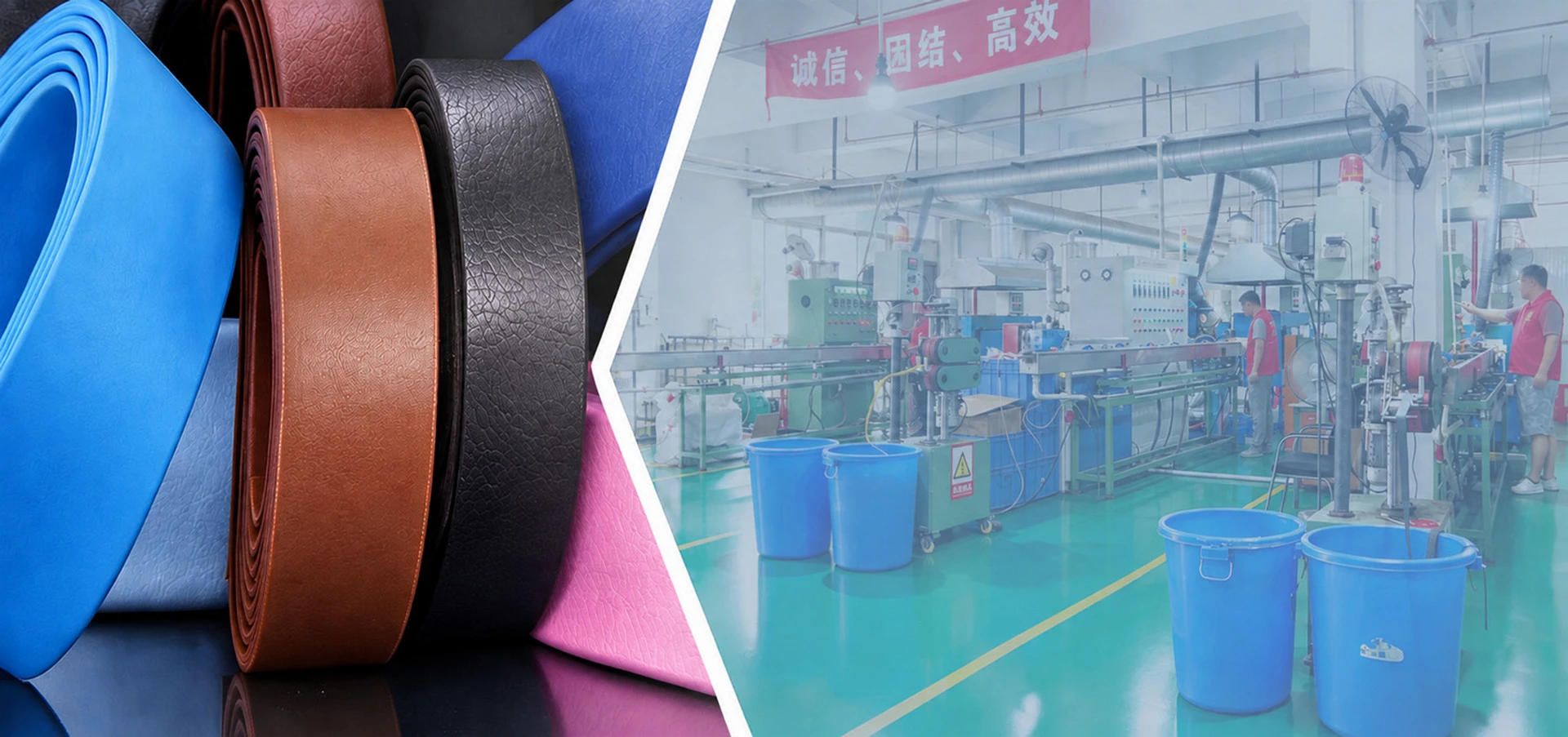
By contrast, products that share a common material but serve different applications may complement each other. PVC-coated webbing, for example, can be used in collars and leashes, while the finished products can still differ in design, hardware, dimensions, and intended market positioning.
A shared material does not automatically make two finished products commercially interchangeable.
Plan Shared Components Without Making Every Product Identical
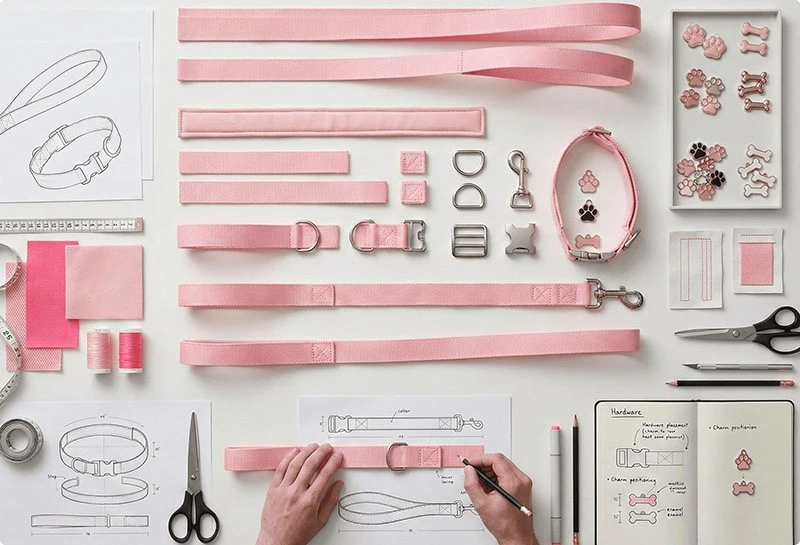
For a growing pet product range, common components can simplify sourcing. However, standardizing every design around the same components may limit differentiation.
A buyer developing several collar and leash styles can review which elements may be shared and which need to remain product-specific.
Potentially shared elements include:
Selected webbing materials and color references.
Compatible hardware finishes.
Brand logo treatments.
Packaging identification and product labeling, where applicable.
Product-specific elements may include the finished dimensions, adjustment structure, hardware arrangement, stitching layout, and overall design.
For example, two collar collections may use the same color family but require different hardware configurations to support their respective designs. The supplier should receive separate specifications for those configurations rather than assume that a shared material reference makes the products identical.
The objective is to simplify purchasing where appropriate without removing the features that distinguish each product.
Buyers should also confirm whether proposed common components are compatible with the requirements of every product in the range.
Prepare a Product Brief Before Requesting OEM or ODM Development
A supplier cannot reliably assess a product extension from a broad instruction such as "develop a new premium dog collar."
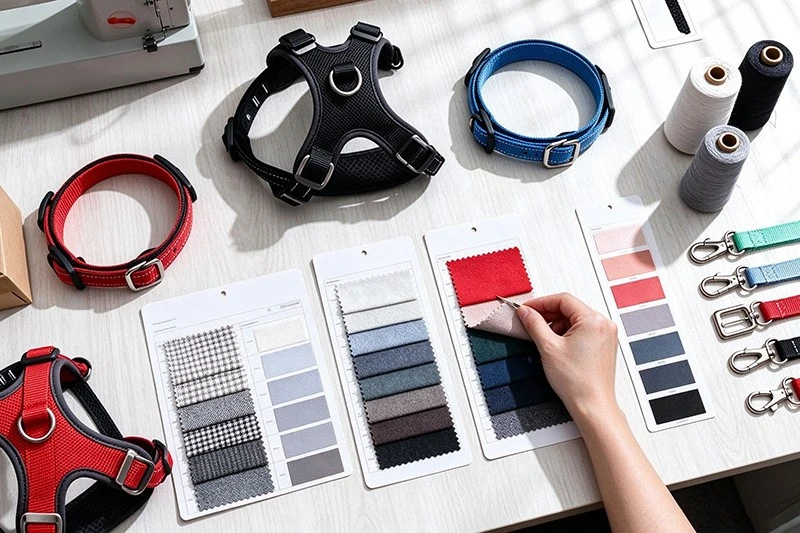
The buyer should provide a product brief that explains the intended commercial role and the requirements that affect development.
A useful brief includes:
Product purpose: Explain the customer need or market opportunity the extension is intended to address.
Reference products: Identify existing products that the new design must complement or differ from.
Design requirements: Describe the intended construction, material, color, hardware, dimensions, and logo treatment as applicable.
Target customer and sales channel: Clarify whether the product is intended for wholesalers, distributors, private label brands, or another B2B channel.
Commercial requirements: Provide the expected order quantity, target cost range where available, required launch date, and relevant purchasing conditions.
Approval criteria: Identify the features that must be confirmed in the sample before bulk production.
For a harness extension, for instance, the buyer should clearly identify the proposed structural differences from existing models rather than rely only on a new color or product name.
For a collar or leash extension, the brief should distinguish the desired finished product from the existing range and specify which components or design elements may be reused.
A clear brief helps the factory assess feasibility and reduces unnecessary sample revisions.
Test the Extension Before Expanding the Entire Range
A product concept may appear attractive during planning but still fail to generate sufficient buyer interest. Where practical, validate demand before committing to a large number of new variations.
Depending on the business model, validation may include discussions with existing wholesale customers, distributor feedback, sample presentations, or a limited initial launch.
Track the performance of the new product separately from the existing range. Useful indicators include buyer inquiries, sample requests, conversion to orders, repeat purchasing, and the sales performance of individual variants.
Interpret the results in context. A new product with fewer initial orders may still serve an important strategic customer, while a product receiving many inquiries may not generate commercially viable orders.
For B2B suppliers and brands, the decision should consider both demand and the cost of maintaining the extension.
If the new product does not produce a meaningful commercial difference, revising the concept or consolidating overlapping products may be more practical than adding further variations.
FAQ
Q: When Should A Private Label Pet Brand Introduce A New Product Instead Of Another Variation?
A: Consider a new product when it addresses a distinct customer requirement, offers a meaningful design or functional difference, or serves a market segment not adequately covered by the existing range. Minor changes may be better managed as variations.
Q: Can Several Pet Products Use The Same Material And Hardware?
A: Yes, where the components meet the requirements of each design. Buyers should confirm dimensional compatibility, functional suitability, and any product-specific requirements before standardizing components across a range.
Q: What Information Should Buyers Provide For A New OEM Pet Product?
A: Provide the intended application, target customer, reference products, design requirements, estimated order quantity, target cost where available, and sample approval criteria. These details help the supplier assess the proposed extension.
Q: Should A Brand Develop Several New Products At The Same Time?
A: That depends on development resources, customer demand, and the complexity of the proposed designs. Prioritizing the strongest opportunities can make it easier to evaluate demand and manage supplier coordination before expanding further.
Develop Your Next Private Label Pet Product With GH Material
GH Material works with B2B buyers on pet products including collars, leashes, harnesses, and selected accessories. Buyers planning a product line extension can share their existing product references, proposed design changes, target quantities, and intended market.
This information helps establish which requirements need to be developed, which existing components may be suitable for reuse, and what should be confirmed during sample approval.
Contact GH Material to discuss your next private label pet product development project.