


How to Specify Dog Leash Length for Wholesale Orders
Oct 21, 2026
Leave a message
When sourcing dog leashes in bulk, length is more than a number on a product listing. It is a specification that affects product presentation, packaging, product assortment, and consistency across repeat orders.
A buyer may request a 1.2-meter leash, while a supplier may interpret the measurement differently depending on the leash structure. For example, should the measurement include the handle loop? Should it run from the end of the handle to the end of the snap hook, or only along the main leash strap?
These details should be clarified before production.
For importers, wholesalers, and private-label pet brands, the goal is to establish one clear measurement method that both the buyer and supplier can follow. This article focuses on defining finished dog leash length-not on choosing leash materials, hardware, or general product specifications.
Define What the Leash Length Measures
The first step is to establish a consistent measurement baseline. Without one, two suppliers may interpret the same requested length differently.
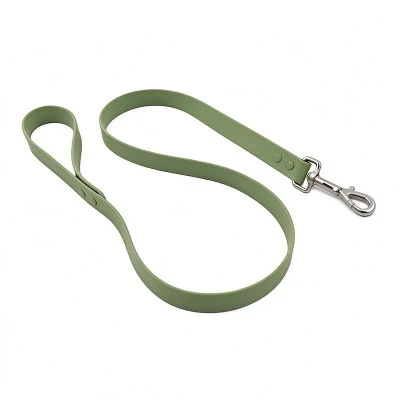
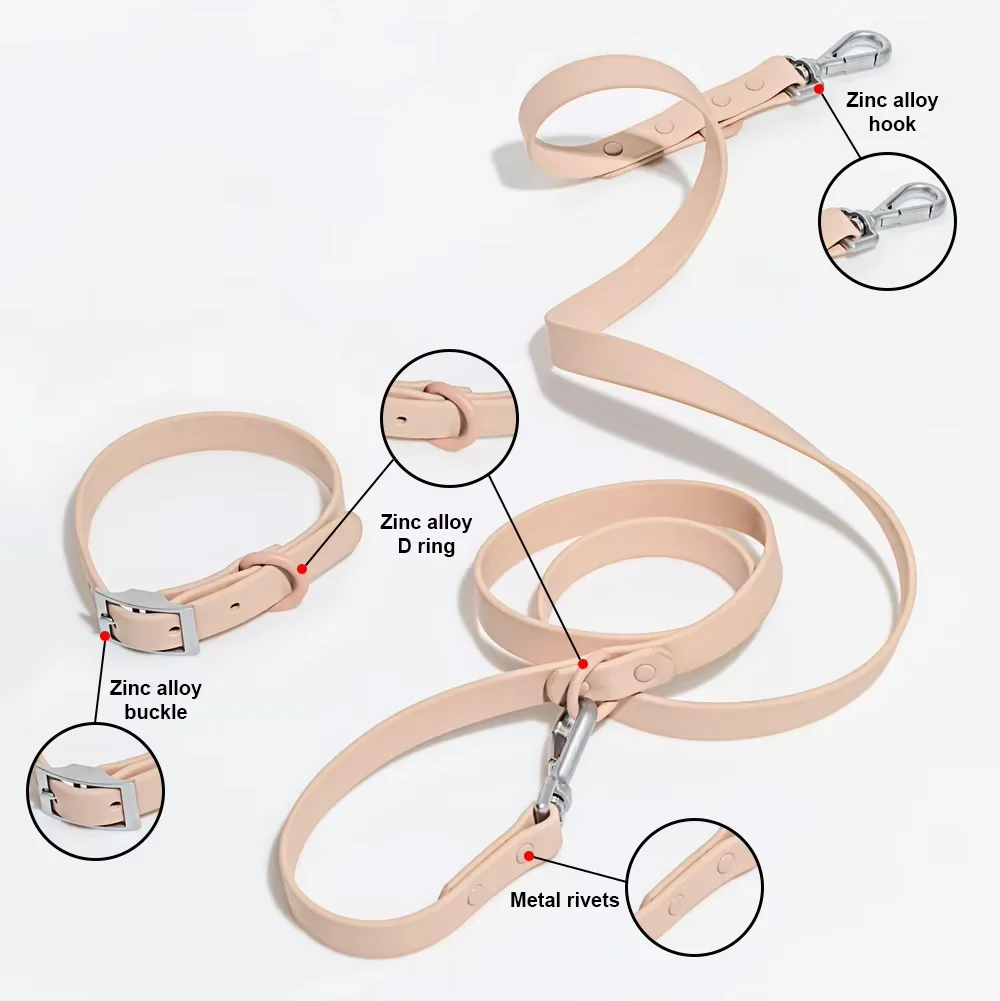
For example, a finished leash contains several components:
- The main webbing section
- The handle or hand loop
- The metal snap hook
- Any additional rings, connectors or adjustable sections
These components contribute to the overall construction, but their dimensions may be measured differently depending on the product design.
Overall length versus usable length
Overall length generally refers to the distance from one end of the finished product to the other. However, the exact endpoints must still be stated.
Usable length may refer to the effective length available between two connection points or another buyer-defined measurement. It should not be assumed to mean the same thing across suppliers.
When specifying dog leash length, buyers should identify the starting point, ending point and whether hardware is included in the measurement.
A simple specification might read:
"Finished leash length: 180 cm, measured from the outermost end of the handle to the end of the snap hook."
This is only an example of a measurement definition, not a standard size recommendation. Buyers should select the actual dimensions required for their product.
Confirm the Measurement Method Before Sampling
A measurement written on a quotation is useful only when both parties interpret it in the same way.
Before sample production, buyers should confirm the following details:
| Specification item | What to clarify |
|---|---|
| Target length | Required finished length and measurement unit |
| Starting point | Where measurement begins |
| Ending point | Where measurement finishes |
| Hardware | Whether the hook and other fittings are included |
| Handle | Whether the handle is included in overall length |
| Tolerance | Acceptable dimensional variation |
| Measurement condition | Whether the leash is measured flat, relaxed or under another agreed condition |
The measurement condition matters because flexible webbing can change shape when handled or pulled. If a particular measurement method is required, document it rather than relying on an informal verbal explanation.
The dimensional tolerance should also be agreed upon according to the product design and manufacturing requirements. Do not assume that every supplier uses the same tolerance.
How Leash Length Affects Product Configuration
Webbing and finished construction
The required length determines the main webbing dimension and influences how the handle and attachment points are arranged.
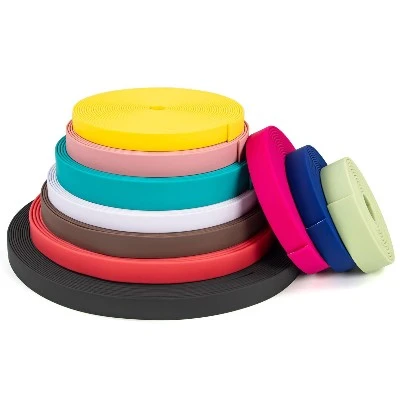
For a PVC- or TPU-coated webbing leash, buyers should confirm the selected material, width, thickness, surface finish and construction alongside the finished length. These details help the manufacturer assess the requested configuration.
GH Material manufactures PVC- and TPU-coated webbing and supplies finished pet products. Buyers developing a leash range can discuss their material and finished-product requirements together.
See the coated webbing product category for related material options.
Hardware and attachment points
The hook, rings and adjustment components also affect the final construction. Buyers should specify the required hardware and clarify whether the target length refers to the complete assembled leash.
If the design includes multiple attachment points or an adjustable section, the specification should explain how the length is measured in each relevant configuration.
Packaging dimensions
The finished leash dimensions and construction can influence how the product is folded, bundled or packed. Buyers should confirm packaging requirements before mass production, especially when individual retail packaging or a fixed package size is required.
Packaging should be checked against the actual approved product rather than estimated from the webbing length alone.
Check the Approved Sample Against the Written Specification
A physical sample allows the buyer to review the finished product before authorizing bulk production. However, visual approval alone may not confirm that the leash meets the required dimensions.
Before approving the sample, buyers should:
Measure the finished leash using the agreed measurement method.
Check whether the handle and hardware are included as specified.
Confirm the webbing width and other agreed dimensions.
Review the hook, rings, stitching or assembly details relevant to the design.
Record any approved changes to the sample.
Keep the final specification linked to the correct product reference.
If the sample is modified after measurement, the updated dimensions should be recorded. Otherwise, the production team may continue using an earlier specification.
The approved sample, written specification and purchase order should describe the same product configuration.
Maintain Length Consistency During Repeat Orders
Repeat orders can create problems when buyers refer to a previous order using only a product name or a general description such as "standard leash."
A more reliable approach is to maintain a product specification record for each SKU. The record should include the confirmed length, measurement endpoints, webbing dimensions, hardware, color, packaging and any agreed tolerances.
When placing a reorder, buyers should identify the approved version of the specification and state whether any changes are required.
If a change in length is requested, confirm whether the change affects the handle construction, hardware placement, packaging or other components. These details should be reviewed before the revised order enters production.
For brands developing several pet walking products, a consistent specification process also supports coordination between dog leashes and matching collars. Explore the pet product category for related product options.
What Buyers Should Send When Requesting a Quote
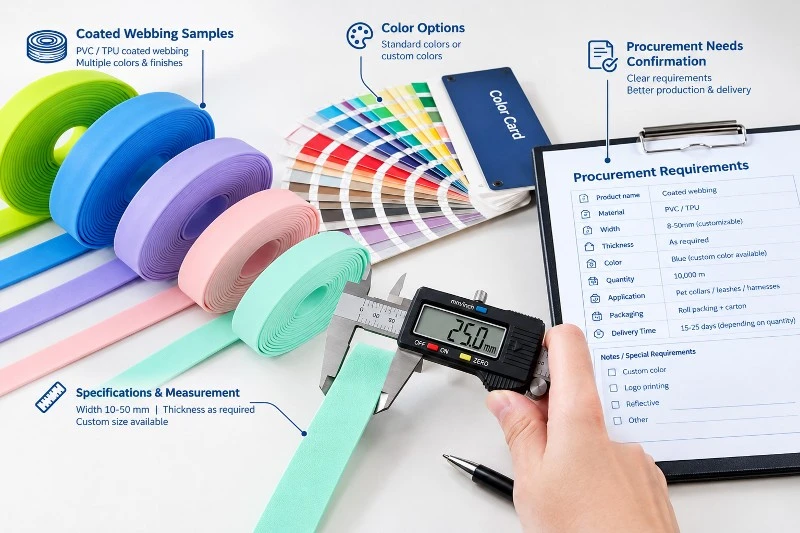
To help a manufacturer assess a wholesale leash project, provide the following information:
Required finished length and measurement method
Webbing material, width and other known dimensions
Color and surface finish
Hook and hardware requirements
Logo, label and packaging requirements
Quantity for each length and color variation
Reference photos, drawings or an existing sample
Target delivery schedule and any special inspection requirements
If some specifications are not yet finalized, identify them as pending confirmation. This allows the manufacturer to distinguish confirmed requirements from items that still need discussion.
GH Material can review the proposed configuration and discuss the available customization options. MOQ, sample arrangements, pricing and production lead time should be confirmed for the specific project.
FAQ
Q: Should Dog Leash Length Include The Snap Hook?
A: It depends on the agreed product specification. The buyer should state whether the snap hook is included and identify the exact measurement endpoint.
Q: Is Finished Leash Length The Same As Webbing Cut Length?
A: No. Finished length describes the assembled product according to an agreed measurement method. Webbing cut length describes the material before assembly and may need to account for folds, attachment points, and construction allowances.
Q: What Tolerance Should Buyers Specify For Wholesale Dog Leashes?
A: There is no single tolerance that should automatically be applied to every design. The buyer and supplier should agree on an acceptable range based on the product construction, measurement method, and order requirements.
Q: How Can Buyers Reduce Length Discrepancies In Repeat Orders?
A: Keep the approved measurement drawing, target dimension, tolerance, and measurement condition with the product specification. Use the same documented method for samples, production, and incoming inspection.
Conclusion
Accurately defining dog leash length is an important part of wholesale product specification. Buyers should confirm the measurement endpoints, hardware inclusion, acceptable tolerance and measurement method before approving a sample.
The same requirements should then be carried through to the quotation, approved sample, purchase order and repeat-order records.
A clear specification helps buyers and manufacturers work from the same expectations, reducing avoidable confusion during custom development and bulk production.
Planning a custom dog leash order? Send your target dimensions, material requirements, hardware preferences and estimated quantity to GH Material to discuss your project.