

How to Choose Hardware for Custom Dog Collars and Leashes
Oct 20, 2026
Leave a message
Introduction
For importers, wholesalers, and private-label pet brands, choosing hardware for custom dog collars and leashes involves more than selecting a buckle or metal hook that looks right. Each component must fit the webbing, work with the product structure, and meet the requirements of the finished item.
A buckle that does not fit the coated webbing can delay sample approval. A different metal finish can change the product's appearance. If hardware specifications are not documented before production, replacement components used in repeat orders may also differ from the approved sample.
The practical question is: How can buyers evaluate hardware compatibility, quality requirements, and customization options before placing a bulk order?
A structured evaluation process helps buyers compare quotations on a consistent basis and reduce avoidable sourcing problems.
Identify the Hardware Required for Each Product
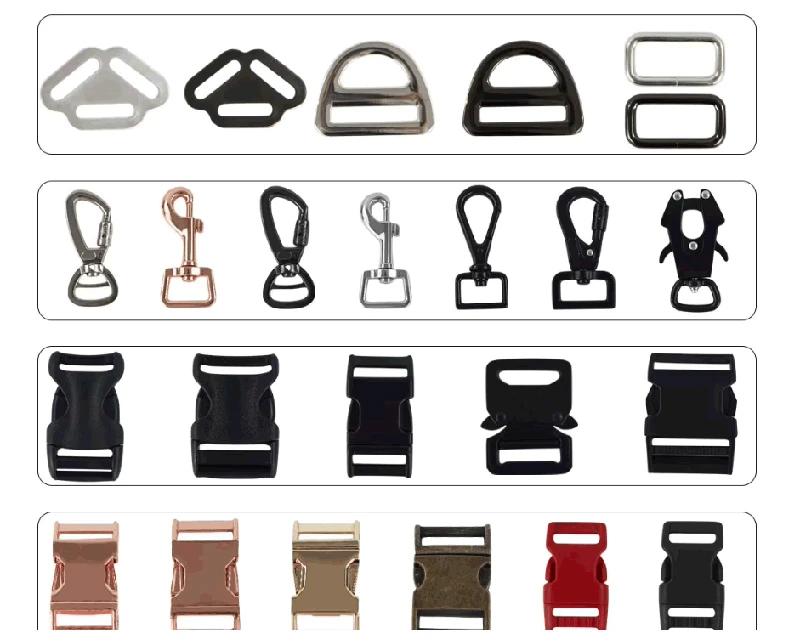
Different pet products require different hardware configurations. Buyers should first identify the function of each component before discussing customization with a supplier.
| Hardware component | What buyers should consider |
|---|---|
| Buckles | Closure method, dimensions, and compatibility with the product design |
| D-rings | Attachment position, dimensions, and intended function |
| Swivel hooks | Connection type, dimensions, and ease of attachment |
| Adjusters | Adjustment range and compatibility with the webbing |
| Connecting rings | Shape, size, and compatibility with other components |
A dog collar may require a buckle, D-ring, and adjuster, while a leash may require a swivel hook and suitable attachment components.
These are typical configurations rather than universal requirements. The actual component selection depends on the product structure and intended use.
Before requesting a quotation, prepare a reference design, product drawing, or sample if available. This helps the supplier understand the required hardware arrangement and identify questions that need to be resolved before production.

Check Hardware Compatibility With the Webbing
Hardware dimensions must match the webbing used in the finished product.
For example, a buckle or adjuster designed for a particular strap width may not fit properly if the selected coated webbing is wider, thicker, or less flexible than expected.
Buyers should confirm:
- The required webbing width and thickness.
- The usable opening dimensions of the hardware.
- Whether the webbing can pass through and sit correctly in the component.
- Whether the selected hardware suits the intended assembly method.
- Whether the completed product maintains the intended fit and appearance.
This is particularly relevant when sourcing PVC or TPU coated webbing for dog collars and leashes. Coating thickness and surface characteristics may affect how the material fits through a component.
Do not rely solely on nominal dimensions. Ask the supplier to confirm compatibility using the actual material specification and, where necessary, a sample assembly.
Evaluate Material and Finish Requirements
Evaluate Material, Finish, and Performance Requirements
The hardware material and surface finish influence the finished product's appearance, intended use, and purchasing cost. Buyers should specify these requirements rather than relying on descriptions such as "metal hardware" or "premium finish."
Confirm the following before ordering:
- Material or component type: Specify the required option where known.
- Color and surface finish: Identify the preferred appearance and whether components must match.
- Intended use: Explain the application and expected use conditions.
- Performance requirements: State any specific requirements for connection strength, closure security, or corrosion resistance.
- Supporting evidence: Ask which specifications or test results are available for measurable performance claims.
A component's appearance does not establish its strength or durability. If load performance is important, agree on the applicable test method and acceptance criteria before production.
Evaluate the complete product configuration where necessary, including the webbing, stitching, hardware, and connection points. Testing an individual component alone may not establish how the assembled collar or leash performs.
Confirm Performance Requirements for the Complete Product
A hardware component may fit the webbing correctly but still require further evaluation for the intended application.
For dog collars and leashes, buyers should identify the performance requirements relevant to the finished product. These may include closure security, connection integrity, adjustability, and resistance to the expected forces during use.
Ask the supplier which checks can be performed on the individual components and which checks apply to the assembled product.
Where strength is important, agree on the applicable test method and acceptance criteria before placing the order. Do not assume that a component's appearance or nominal size proves that it is suitable for a particular load.
Testing should reflect the complete product configuration, including the webbing, stitching, hardware, and connection points where applicable.

Understand How Hardware Choices Affect Order Cost and Consistency
The lowest-priced component does not always provide the most suitable purchasing outcome. A hardware option that requires special sourcing, additional assembly work, or changes to the approved design may affect the overall quotation and production schedule.
When comparing suppliers, ask whether the quoted price includes the same component types, dimensions, finishes, and customization requirements. Otherwise, quotations may not be directly comparable.
Also confirm whether the requested components are standard options or require special sourcing. Ask about available alternatives if the preferred option cannot be supplied, and clarify whether a change will affect the price or estimated lead time.
For repeat orders, retain the approved sample and written specifications. If a component must change, document the proposed replacement and obtain approval before production. This makes it easier to compare subsequent batches against the original requirements.
From Sample Evaluation to Regular Bulk Orders
A practical purchasing process is:
Product Requirements → Hardware Confirmation → Sample Assembly → Evaluation → Trial Order → Regular Bulk Orders
During sample evaluation, buyers should check:
- Whether the hardware matches the agreed dimensions and finish.
- Whether the webbing fits and moves through the relevant components correctly.
- Whether closures, adjustment mechanisms, and connections function as intended.
- Whether the assembled product matches the approved design and appearance.
- Whether any required performance criteria have been assessed using agreed methods.
Once the sample is approved, record the component specifications and retain the approved reference. A trial order can then help buyers evaluate consistency across a larger quantity before moving to regular purchasing.
The acceptance criteria should be agreed in advance. This avoids relying on subjective descriptions such as "good quality" when reviewing samples or bulk deliveries.
How GH Material Supports Custom Pet Product Sourcing
GH Material supplies pet products and PVC/TPU-coated webbing for B2B buyers developing custom collars, leashes, and related products.
For projects involving coated webbing and finished pet products, buyers can discuss the proposed product structure, webbing dimensions, hardware preferences, colors, logo requirements, and estimated quantities with the team.
Our OEM/ODM process can support requirement confirmation, sample review, and bulk-order planning based on the selected product and confirmed specifications. Buyers should confirm the availability of specific hardware options and any testing requirements for their project before placing an order.
For a more organized sourcing process, provide the same product brief when requesting quotations from different suppliers. This helps clarify what is included and makes it easier to evaluate the proposed solutions.
FAQ
Q: Which hardware components are commonly used for custom dog collars and leashes?
A: Common options include buckles, D-rings, swivel hooks, adjusters, and connecting rings. The actual selection depends on the product structure and intended application.
Q: How do I choose the correct buckle size for coated webbing?
A: Confirm the finished webbing width and thickness, then compare them with the usable opening of the buckle. If the fit is uncertain, request a sample assembly before approving the design.
Q: Is metal hardware always better than plastic hardware?
A: Not necessarily. The suitable option depends on the product design, intended use, appearance requirements, and specified performance criteria. Evaluate the component against the actual project requirements.
Q: Should I test a sample before placing a bulk order?
A: Yes. Sample evaluation helps confirm dimensions, assembly fit, appearance, and function. For requirements involving strength or corrosion resistance, agree on suitable test methods and acceptance criteria with the supplier.
Q: How can I maintain consistency across repeat orders?
A: Keep the approved sample and written specifications, including component dimensions, material, finish, and configuration. Document and approve any proposed changes before production.
Planning a Custom Dog Collar or Leash Project?
Share your product design, PVC/TPU-coated webbing requirements, preferred hardware components, customization details, and estimated order quantity with GH Material.
Our team can review your requirements and discuss suitable options for your project.
Contact GH Material to discuss your custom pet product requirements.