

How To Evaluate Stitching Consistency In Wholesale Dog Leashes
Oct 22, 2026
Leave a message
When sourcing wholesale dog leashes, buyers often focus on webbing material, hardware, finished length and color. However, stitching is another important part of the finished product, particularly around the handle and snap-hook connection.
Two leashes may use the same webbing and hardware but have noticeably different workmanship. Uneven stitch spacing, misplaced seams, loose thread ends or inconsistent reinforcement can affect appearance and make products less consistent across a wholesale shipment.
For importers, distributors and private-label pet brands, the goal is not simply to find a leash with neat stitching. It is to establish clear, repeatable inspection criteria that can be applied to samples and bulk production.
This guide explains how to evaluate stitching consistency in wholesale dog leashes and what buyers should confirm with a manufacturer before approving an order.
Check Stitch Spacing and Stitch Density
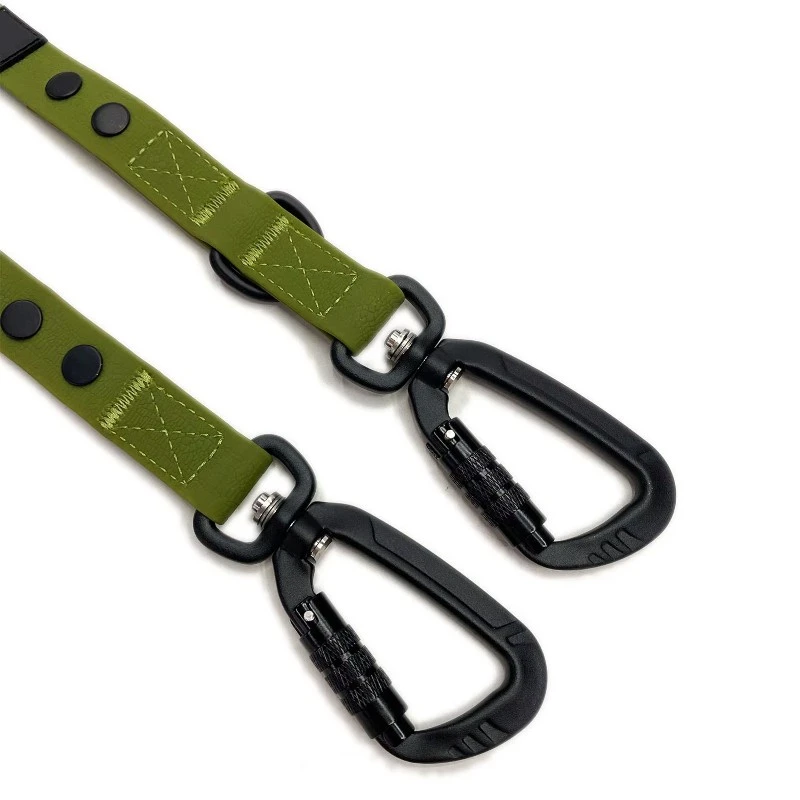
Stitch spacing refers to the distance between individual stitches along a seam. Stitch density describes how closely the stitches are arranged within a given length.
When inspecting a dog leash, look at whether the stitches appear reasonably consistent along the same seam. Sudden changes in spacing, irregular stitch lines or visibly crowded sections may indicate inconsistent workmanship.
However, tighter stitching is not automatically better. The appropriate stitch density depends on the webbing construction, thread, seam design and intended application. Excessively dense stitching may create too many needle holes in some materials, while insufficient stitching may not provide the intended seam construction.
What wholesale buyers should check:
- Compare stitch spacing along the same seam.
- Look for skipped stitches, broken threads and irregular stitch lines.
- Check whether the seam follows the approved sample.
- Confirm any specific stitch-density requirement with the manufacturer before production.
Rather than imposing an arbitrary stitch count on every design, buyers should agree on a suitable construction and use the approved sample or written specification as the reference.
Inspect Seam Alignment and Position
Stitching consistency is not only about individual stitches. The position of the seam relative to the webbing edge and folded material is equally important.
On a leash handle, for example, the webbing is folded to create a loop. At the snap-hook end, the webbing may be folded around the hardware and secured with stitching. If the stitching position varies noticeably between products, the finished leashes may look different even when their dimensions are nominally identical.
Misalignment can also make the construction appear untidy and complicate comparisons between production samples and finished goods.
During inspection, examine whether:
- The seam follows a consistent path.
- The stitching remains within the intended sewing area.
- Folded webbing sits in the intended position.
- The seam does not visibly drift toward the edge.
- Similar products show comparable construction.
For customized leashes, buyers should identify the relevant seam positions in the approved sample or product drawing. This is particularly useful when a brand expects the same handle appearance and connection design across several product variations.
Examine Reinforcement at the Handle and Snap-Hook Connection
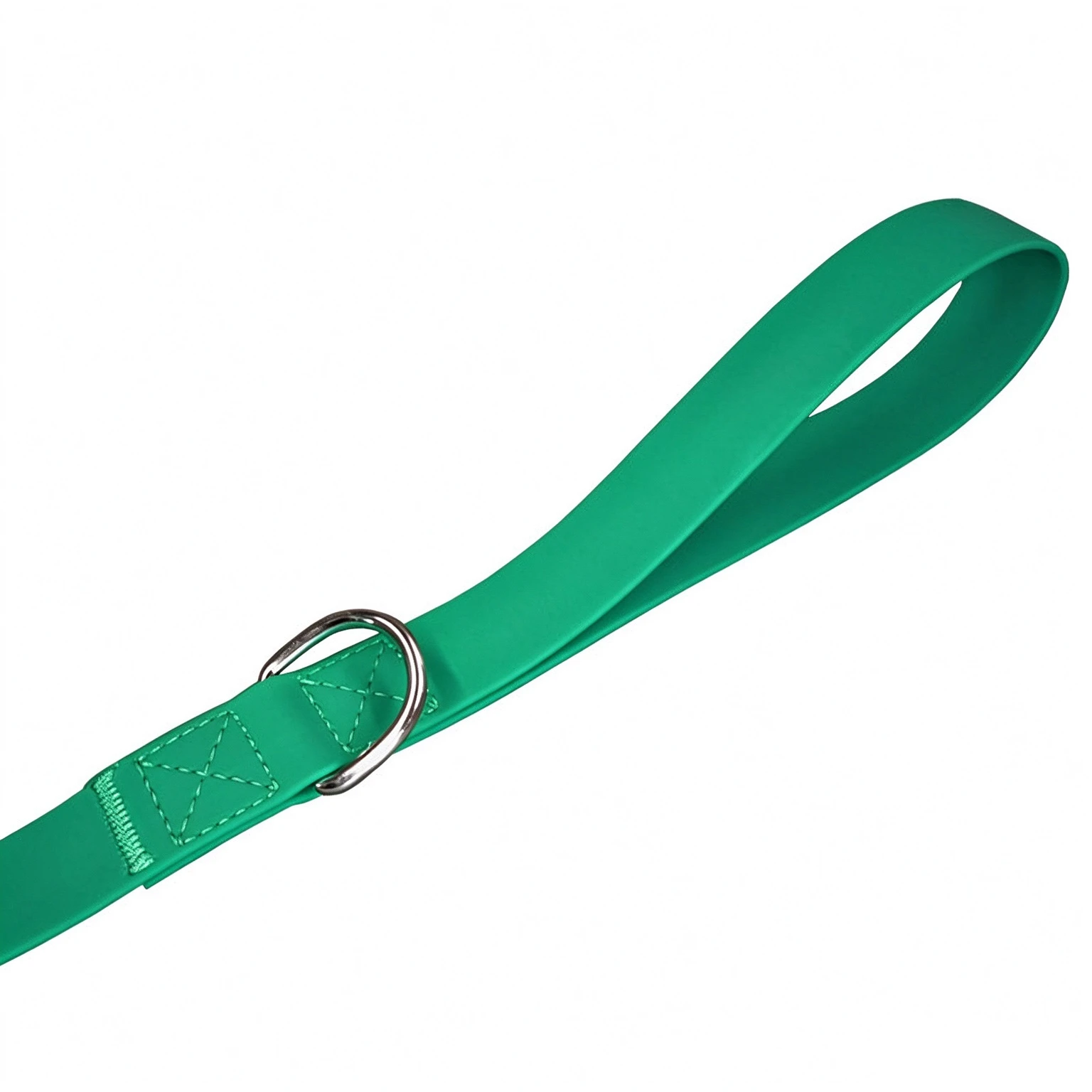
The handle and snap-hook connection are two areas that deserve particular attention because they are important parts of the leash construction.
At the handle, the folded webbing is secured to form a loop. At the hardware end, the webbing is attached around or near the snap hook according to the product design. These areas may use different stitching patterns or reinforcement arrangements.
Buyers should not assume that every leash needs the same reinforcement method. A straight seam, box stitch, bar tack or another construction may be appropriate depending on the design and requirements.
Instead, the inspection should establish whether the actual construction matches the approved product specification.
Check for:
- Complete and consistent reinforcement where specified.
- Broken or skipped stitches in important connection areas.
- Loose seams or visibly incomplete sewing.
- Correct positioning of the folded webbing.
- Differences between the approved sample and bulk products.
Visual inspection alone cannot establish the breaking strength of a finished leash. If the product has a defined load requirement, buyers should specify the required finished-product test method and acceptance criteria with the manufacturer.
A neat-looking seam should not be treated as proof that the complete leash meets a particular strength requirement.

Check Thread Ends, Broken Stitches and Seam Finishing
Small sewing defects can become noticeable when many units are displayed together or sold under the same private label.
Loose thread ends, broken stitches and incomplete seam finishing are practical inspection points because they can be identified without specialized equipment.
However, buyers should distinguish between a cosmetic thread end and a defect that affects seam integrity. A small loose end may require trimming, while a broken stitch within a critical connection may require further investigation or rejection according to the agreed specification.
A practical inspection should include:
Loose or excessively long thread ends.
Broken or skipped stitches.
Unfinished or visibly open seams.
Unintended gaps in stitched connections.
Fraying or damage around the sewing area.
Obvious differences in finishing between similar products.
For PVC- or TPU-coated webbing, also examine the surrounding material for visible damage caused during sewing. The coated surface and textile structure may respond differently to needle penetration, depending on the material construction.
Any acceptance limits should be agreed before bulk production rather than decided after the shipment arrives.

Compare Stitching Across a Wholesale Production Batch
Inspecting one sample is not enough to understand whether a supplier can maintain consistent workmanship across an order.
For wholesale purchasing, buyers should compare multiple finished units from the production batch. This is especially relevant when an order contains different colors, sizes or leash designs.
A useful comparison process is to select products with the same specification and examine the same locations on each one.
For example, compare the handle seam on several leashes, then compare the snap-hook connection on those same products. Look for differences in stitch spacing, seam position, reinforcement pattern and thread finishing.
Record any deviation from the approved sample and determine whether it falls within the agreed acceptance criteria.
For larger orders, buyers may establish a sampling inspection plan based on order quantity, product risk and the applicable inspection agreement. The sample size and acceptance limits should be defined in advance rather than chosen arbitrarily.
This approach helps make inspection more consistent and gives the buyer and manufacturer a shared basis for discussing workmanship issues.
Create a Stitching Inspection Checklist Before Production
A clear checklist helps prevent vague instructions such as "make the stitching better" or "ensure good quality."
Before placing a wholesale order, buyers can document the following requirements.
| Inspection item | What to confirm |
|---|---|
| Stitch spacing | Consistent appearance and agreed requirements |
| Seam alignment | Position relative to webbing edges and folds |
| Handle construction | Fold position and stitching pattern |
| Snap-hook connection | Approved attachment and reinforcement method |
| Thread condition | No unacceptable broken or loose stitching |
| Seam finishing | Complete seams and acceptable thread ends |
| Material condition | No unacceptable visible sewing damage |
| Batch consistency | Comparable workmanship across inspected units |
| Strength requirements | Agreed testing method where required |
The approved sample, drawings and written specifications should work together as the production reference. If a particular stitch pattern or seam dimension is essential to the design, it should be recorded rather than left to visual interpretation alone.
Conclusion
Evaluating stitching consistency in wholesale dog leashes requires more than checking whether the seams look neat. Buyers should examine stitch spacing, seam alignment, reinforcement, thread finishing and consistency across multiple units.
For private-label brands, importers and distributors, the most practical approach is to define the expected construction before production, compare finished products against an approved reference and agree on inspection criteria with the manufacturer.
GH Material supplies custom pet products and PVC/TPU coated webbing for B2B buyers. If you are developing a private-label dog leash, share your product design, webbing requirements, connection details and expected order quantity to discuss suitable manufacturing options.
Request a Quote for Custom Dog Leashes
FAQ
Q: Does Tighter Stitching Always Mean A Stronger Dog Leash?
A: No. Seam performance depends on the complete construction, including the webbing, thread, stitch pattern and connection design. Stitch density alone cannot establish the strength of a finished leash.
Q: Which Parts Of A Dog Leash Should Buyers Inspect Most Carefully?
A: Pay particular attention to the handle seam and snap-hook connection, along with any other reinforced areas specified in the design. The inspection should follow the product's actual construction.
Q: Can Visual Inspection Confirm Dog Leash Strength?
A: No. Visual inspection can identify visible workmanship defects, but it cannot establish a specific breaking strength. Where strength requirements apply, the buyer should agree on an appropriate finished-product test and acceptance criteria.
Q: How Can Buyers Maintain Stitching Consistency Across Bulk Orders?
A: Use an approved sample and written construction requirements, define acceptable defects before production, and compare the same seam locations across inspected products. Record deviations and resolve them against the agreed criteri