

How to Compare Supplier Quotes for Custom Pet Products
Oct 19, 2026
Leave a message
When sourcing custom dog collars, leashes, harnesses or other pet products, buyers may receive quotations from several manufacturers that look similar at first glance. However, the lowest unit price does not always represent the lowest total purchasing cost.
One supplier may quote a different product specification, exclude packaging costs or use different hardware. Another may include more items in the quoted price but list them less clearly.
The key is to compare quotations against the same product requirements, cost scope and order conditions. This guide explains how B2B buyers can make that comparison before choosing a supplier.
Confirm That Every Supplier Is Quoting the Same Product
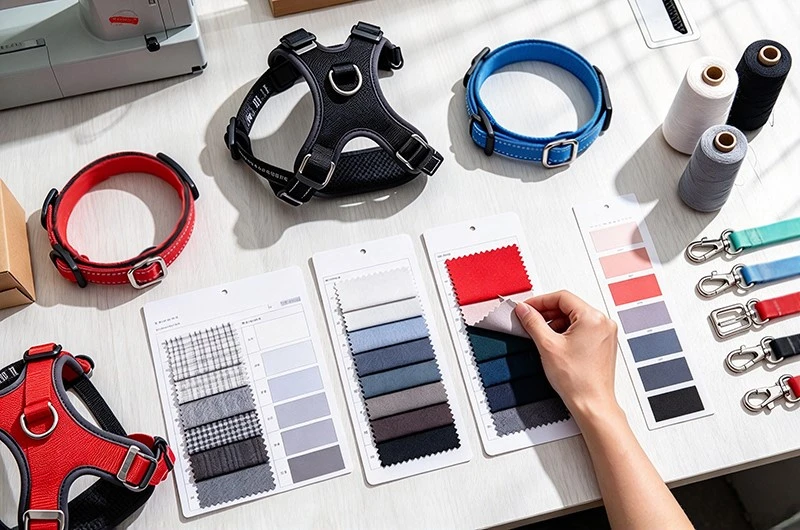
Before comparing prices, check whether each quotation refers to the same product specification.
For custom pet products, the details may include:
Product structure: The design and construction of the collar, leash or harness.
Dimensions: Required size, length, width and other relevant measurements.
Materials: The specified webbing, coating and other materials.
Hardware: Buckles, D-rings, swivel hooks, adjusters and other components.
Color and finish: The agreed color, surface appearance and finishing requirements.
Branding: Logo method, position, size and any relevant label requirements.
A quotation based on standard components should not be compared directly with one based on different custom components without accounting for the difference.
If a supplier proposes an alternative material or component, ask for that change to be identified clearly. Otherwise, a lower price may reflect a different product rather than a more competitive offer.
Compare the Price at the Same Order Quantity
Unit prices can vary according to order quantity. Make sure every supplier is quoting the same quantity and the same quantity structure.
For example, if you plan to order several colors or sizes, clarify whether the quoted quantity applies to the total order or to each individual color and size.
Ask suppliers to identify:
The quantity covered by the quotation
Whether different colors or sizes have separate minimum order requirements
Whether the price changes at different order quantities
Whether any setup or customization charges apply
Do not assume that a unit price quoted for a larger order will apply to a smaller initial order.
If you are evaluating a trial order before committing to larger volumes, request pricing for the actual trial quantity as well as any realistic future quantity you want to assess.
Check What the Quoted Price Includes
A useful quotation should make the included and excluded costs clear enough for you to compare offers on a consistent basis.
Review the following items where applicable:
| Cost item | What to confirm |
|---|---|
| Product manufacturing | Does the price cover the complete agreed product or only certain components? |
| Logo and customization | Are printing, embossing, labels or other requested customizations included? |
| Packaging | Is the price based on bulk packing, individual packaging or another specified arrangement? |
| Sampling | Are sample charges quoted separately? |
| Setup or tooling | Are there any applicable one-time charges? |
| Freight and delivery | Is transportation included, excluded or quoted separately? |
| Taxes and other charges | Are any additional charges applicable under the proposed transaction terms? |
Not every project will have every cost item. The purpose is to identify the actual scope of each quotation rather than assume that all suppliers have included the same things.
For international orders, compare quotations using the same agreed delivery basis and clearly stated trade terms. A product price that excludes freight should not be compared directly with a delivered price without adjusting for the difference.
Compare Lead Time and Payment Terms Separately
Price is only one part of a purchasing decision. Record the proposed lead time and payment terms for each supplier so that you can evaluate them alongside the price.
For lead time, clarify what the stated period refers to. Does it begin after order confirmation, deposit payment, sample approval or another milestone? Also ask whether the quotation assumes that the artwork, specifications and packaging details have already been finalized.
For payment terms, compare the requested deposit, balance payment timing and any other conditions stated in the offer.
Avoid treating an unclear lead time or an unspecified payment condition as equivalent to a confirmed term. Ask the supplier to clarify it before making the comparison.
Check Whether the Quotation Matches the Approved Sample or Reference
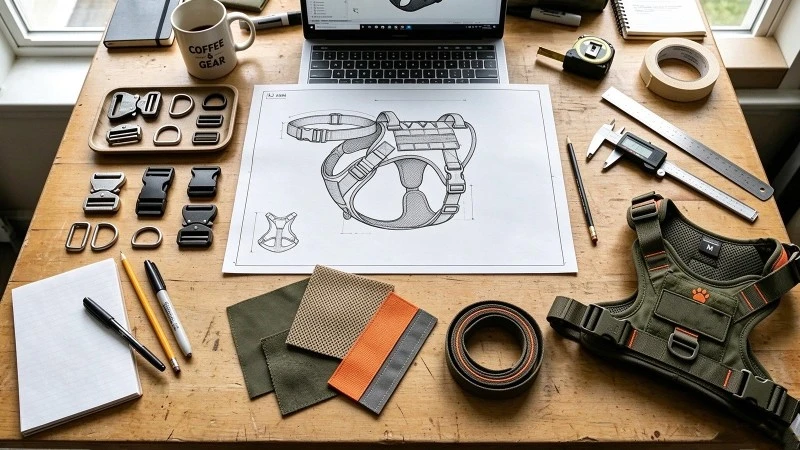
If you already have an approved sample, drawing or specification sheet, use it as the common reference for all quotations.
The quotation should identify any differences from that reference, including changes to materials, dimensions, hardware, logo placement or packaging.
If the project is still at the development stage, separate the sample-development cost from the estimated mass-production price. Confirm what is included in the sample charge and whether any conditions apply to subsequent production.
Do not assume that two quotations cover the same sample or approval process simply because they describe the same product category.
A written record of the agreed specification makes it easier to review the quotation and reduces the risk of comparing different product configurations.
Identify the Reasons Behind Significant Price Differences
When two suppliers quote different prices for what appears to be the same pet product, do not assume that the lower-priced offer is automatically more competitive.
A significant price difference may result from different materials, hardware, construction methods, customization scope or order conditions. The goal is to identify the reason for the difference before making a purchasing decision.
Start by checking these areas:
Material and component differences: Confirm whether both quotations specify the same webbing, coating, buckles, D-rings, hooks and other components.
Product construction: Check whether stitching, reinforcement, assembly details and other structural requirements match your reference.
Customization scope: Verify that logo application, color requirements, labels and packaging are included on the same basis.
Excluded costs: Check whether either supplier has excluded sampling, setup, packaging or delivery costs that apply to your order.
Unconfirmed specifications: Identify any items that have not been clearly confirmed in writing.
If the reason for the price difference is still unclear, ask both suppliers to confirm the relevant details against the same specification. Requesting a lower price without first identifying the difference may lead to a quotation that no longer meets your original requirements.
The best quotation is not necessarily the cheapest one. It is the offer that meets your required specification, clearly defines the cost and delivery conditions, and allows you to assess the purchasing risks before placing the order.

Ask for Clarification Before Selecting a Supplier
If a quotation is missing important information, send the supplier a short list of specific questions rather than asking for a general price revision.
For example:
Does this price cover the complete product shown in the reference?
Are the specified materials, hardware and logo requirements included?
Is individual packaging included in the unit price?
Does the quoted lead time begin after sample approval or order confirmation?
Which costs are charged separately?
Can you confirm that the quotation is based on the stated quantity and specification?
Give each supplier the same clarification points wherever possible. Their revised quotations will then be easier to compare on an equal basis.
Conclusion
Comparing supplier quotations for custom pet products is not simply a matter of ranking unit prices. Buyers need to confirm that the product specifications, order quantities, included costs, delivery terms and payment conditions are aligned.
A standardized comparison sheet and a written record of unresolved items can help your purchasing team identify genuine price differences before placing an order.
Planning a custom pet product order? Share your product type, reference photos or drawings, key specifications, order quantity, customization requirements and packaging needs with GH Material. These details help us understand the project scope and prepare a quotation for your review.