


How to Calculate Landed Cost for Wholesale Pet Products
Oct 26, 2026
Leave a message
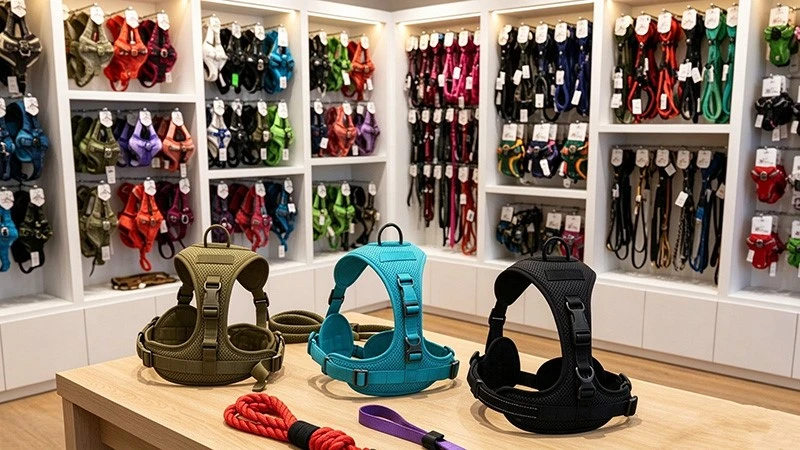
When sourcing wholesale pet products from overseas, the lowest factory quotation does not always result in the lowest total purchasing cost. Importers need to consider not only the unit price but also transportation, import duties, customs clearance, inspection, and other expenses associated with bringing products into their destination market.
For buyers sourcing dog collars, leashes, harnesses, and related accessories, calculating the landed cost helps compare quotations on a consistent basis and estimate the actual cost of inventory.
Start With the Total Purchase Cost
The factory price is only one component of the overall cost. Before comparing suppliers, buyers should identify the expenses that apply to each quotation.
A landed-cost calculation may include:
Product purchase value
Inland transportation in the country of origin, where applicable
International freight and insurance, depending on the agreed shipping terms
Customs duties and applicable import taxes
Customs brokerage and clearance fees
Destination handling and delivery charges
Inspection or other order-specific service fees
Not every shipment includes the same cost components. The applicable expenses depend on the destination, shipping method, product classification, agreed Incoterm, and importer requirements.
Buyers should therefore request a clear breakdown rather than assume that two quotations cover the same services.
Compare Quotations on the Same Trade-Term Basis
A quotation under EXW, FOB, CIF, or another Incoterm may allocate costs and responsibilities differently.
For example, an FOB quotation generally includes the seller's responsibility for delivering the goods on board the nominated vessel at the agreed port. The buyer typically arranges the main ocean freight and insurance, if required.
A CIF quotation includes the seller's cost of carriage and insurance to the named destination port, subject to the agreed terms. However, destination charges, import clearance, duties, and inland delivery may still need to be paid by the buyer.
These quotations should not be compared by looking at the unit price alone.
When requesting prices for custom dog collars, leashes, or harnesses, specify the required Incoterm and named place or port. If suppliers quote under different terms, identify which costs remain outside each quotation before deciding which offer is more competitive.


Calculate the Landed Cost Per Sellable Unit
Once the relevant expenses have been identified, buyers can estimate the cost per unit.
Landed cost per unit = Total applicable purchasing and import costs ÷ Number of sellable units received
Consider a hypothetical order of 5,000 dog collars.
| Cost item | Illustrative amount |
|---|---|
| Product purchase cost | $10,000 |
| Freight and insurance | $1,500 |
| Customs clearance and destination handling | $500 |
| Other applicable import costs | $1,000 |
| Total estimated cost | $13,000 |
In this example, the estimated landed cost is $2.60 per collar.
These figures are for illustration only. They are not a shipping quote, duty estimate, or statement of current import requirements. Actual duties and taxes must be verified for the specific product classification and destination.
If some units are damaged, missing, or otherwise unsellable, the effective cost per sellable unit will be higher. Buyers should use the expected sellable quantity when assessing inventory economics.
Evaluate How Order Quantity Changes the Cost
Some purchasing expenses are relatively fixed for a shipment, while others increase with the order value, weight, volume, or number of units.
For example, a customs brokerage fee may remain similar across two shipments, while freight charges may change substantially with shipment size and transport method.
This means a larger order can reduce certain per-unit logistics costs, but it does not automatically guarantee a lower landed cost.
Importers should compare several realistic order quantities against expected sales and inventory turnover. Ordering more products than the business can sell may increase storage costs, tie up working capital, and create a risk of unsold inventory.
For a private-label pet product program, the better order quantity is the one that balances unit economics with expected demand, available cash flow, and replenishment needs.

Include Product Configuration in the Comparison
Two quotations are comparable only when they refer to substantially equivalent products and order requirements.
For dog collars and harnesses, relevant differences may include dimensions, materials, hardware configuration, logo application, color options, and the number of units in the order.
A lower quotation may cover a simpler configuration or exclude a requested customization. Buyers should confirm that the quoted product matches the intended specification before treating the price difference as a saving.
For custom pet products, ask each supplier to identify the quoted configuration, customization scope, quantity, trade terms, and any separately charged services.
This makes it easier to distinguish a genuine cost advantage from a difference in what is being supplied.
Separate Recoverable Taxes From Actual Costs
Import taxes require careful treatment in a landed-cost calculation.
Depending on the destination country and the importer's tax status, some taxes may be recoverable, while others may represent a final business expense. Tax treatment varies by jurisdiction and business circumstances.
For internal purchasing decisions, buyers should distinguish between:
Costs that form part of the product's inventory cost
Taxes or duties that are not recoverable
Recoverable taxes that affect cash flow but may not represent a final cost
Expenses that arise only under particular shipping or clearance arrangements
Importers should confirm the applicable treatment with their customs broker or tax adviser rather than applying one calculation method to every destination.
Prepare a Consistent Cost Comparison Before Ordering
Before placing a wholesale pet product order, prepare a simple comparison sheet for each supplier.
Record the unit price, quantity, product configuration, Incoterm, estimated freight, insurance, applicable duties, clearance charges, delivery costs, and expected sellable quantity.
Mark any unconfirmed expense as an estimate rather than treating it as a fixed amount. Request updated freight and import-cost information when the destination, shipment size, or delivery method changes.
A consistent calculation gives purchasing teams a more reliable basis for comparing suppliers, setting resale prices, and estimating gross margins.
Conclusion
Calculating the landed cost of wholesale pet products helps importers look beyond the factory quotation and understand the total cost of receiving sellable inventory.
For dog collars, leashes, harnesses, and other pet accessories, buyers should compare equivalent product configurations, account for the responsibilities included in each shipping term, and verify destination-specific import expenses.
Before requesting a quotation, prepare the product requirements, estimated quantity, destination, and preferred shipping arrangement. This allows a manufacturer to provide a more relevant product quotation and helps the buyer identify which additional costs still need confirmation.
Planning a wholesale or private-label pet product order? Contact GH Material with your product requirements, estimated quantity, customization details, and destination market to discuss a quotation for your project.
FAQ
Q: What Is The Landed Cost Of A Pet Product?
A: The landed cost is the total applicable cost of purchasing and bringing goods to the specified destination, including relevant freight, duties, clearance, and other expenses.
Q: Is FOB Cheaper Than CIF?
A: Not necessarily. FOB and CIF allocate costs and responsibilities differently. Buyers should compare the total expected cost under equivalent assumptions rather than relying on the quoted unit price or trade term alone.
Q: Should Import Duties Be Included In Landed Cost?
A: Applicable non-recoverable duties generally need to be considered. The correct amount depends on product classification, origin, destination, and current import rules.
Q: How Can Buyers Compare Quotations From Different Manufacturers?
A: Use the same product specifications, quantity, customization requirements, Incoterm, destination, and cost assumptions for every quotation. Identify exclusions and unconfirmed charges before making a decision.