

Dog Leash Handle Design for OEM Pet Product Development
Nov 17, 2026
Leave a message
Why Handle Design Matters in Dog Leash Development
When developing a dog leash collection, brands often focus on webbing materials, colors, lengths, and metal hardware. However, the handle is another important design element that deserves attention during product development.
The handle directly influences how customers hold and use the leash. Different handle structures can create different product experiences, even when the main webbing material and hardware remain the same.
For importers, wholesalers, and private-label brands, handle design also provides an opportunity to differentiate products without completely changing the basic leash structure.
For example, a standard loop handle may suit general-purpose dog leashes, while a padded or specially structured handle may be more appropriate for products positioned around everyday walking comfort.
Therefore, handle design should be considered as part of the overall product specification rather than treated as a minor finishing detail.
Common Dog Leash Handle Designs
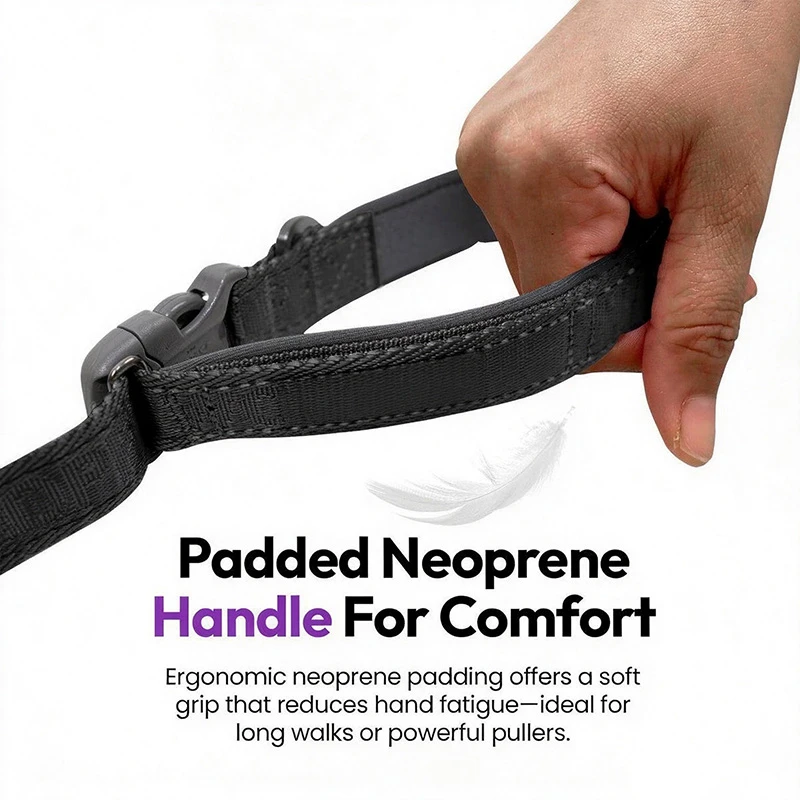
Different handle structures serve different product positioning and manufacturing requirements.
Standard Loop Handle
The standard loop handle is one of the most common structures used in dog leash manufacturing. The webbing is folded back and secured to create a fixed hand loop.
Its relatively simple construction makes it suitable for wholesale collections and everyday dog walking products.
For buyers, this design offers a straightforward starting point when developing products with multiple colors, widths, or lengths.
Padded Handle
A padded handle incorporates additional cushioning material into the grip area.
This design can help brands develop products positioned around a more comfortable holding experience. However, buyers should consider the additional material, sewing operations, and production consistency required.
The padding material and its attachment method should be confirmed during sample development.
Traffic Handle
A traffic handle is an additional short handle positioned closer to the leash attachment end.
It provides another gripping position for situations where a shorter holding distance is required.
For manufacturers, adding this feature changes the leash construction. Buyers should specify its position, dimensions, and attachment requirements rather than simply requesting an additional handle.
Integrated Handle
This approach may suit brands looking for a clean and uncomplicated product design.
The manufacturer should confirm the folding structure, stitching position, and finished handle dimensions before bulk production.
What Should Buyers Specify Before Ordering?
A clear handle specification helps reduce misunderstandings between buyers and manufacturers.
Before requesting a quotation, importers and product developers should consider the following details.
Handle dimensions
Specify the intended internal loop size and overall handle width. These measurements help manufacturers understand the required finished structure.
Material selection
Confirm whether the handle uses the same material as the main leash or includes additional materials such as padding or reinforcement.
For PVC- or TPU-coated webbing products, buyers should also confirm whether the coating and surface finish need to remain consistent throughout the handle area.
Stitching and reinforcement
The handle attachment area should be reviewed as part of the complete leash construction. Buyers can provide reference samples, drawings, or photographs to communicate the desired stitching appearance and structure.
Branding requirements
Logo placement should be considered early in development. Depending on the design, brands may use woven labels, printed logos, embossed details, or other suitable branding methods.
These decisions can affect the handle layout and available space for customization.
How Handle Design Affects Manufacturing and Cost
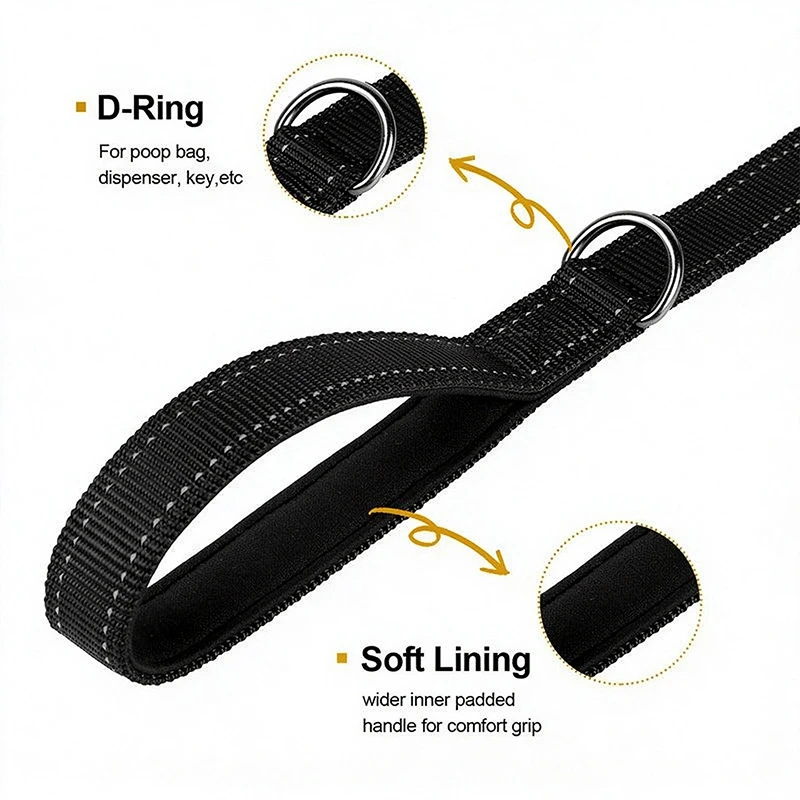
Handle customization can influence more than the appearance of a dog leash. It may also change production steps, material consumption, and assembly requirements.
A standard loop handle generally requires fewer additional components than a padded or multi-handle structure. Additional padding, reinforcement, or decorative materials may require extra cutting, positioning, and sewing operations.
For buyers comparing quotations from different manufacturers, it is important to compare the same product specifications.
A lower quotation may reflect a simpler handle construction rather than a more competitive manufacturing cost for an equivalent product.
When evaluating OEM dog leash suppliers, buyers should pay attention to:
Whether the handle structure matches the approved sample.
Whether stitching and folding positions are consistent.
Whether additional materials are correctly incorporated.
Whether the finished handle dimensions meet the agreed specifications.
Whether branding details are positioned correctly.
A clear product specification makes quotation comparisons more meaningful and helps manufacturers calculate production requirements accurately.
Why Sample Approval Is Important
Handle structures can look similar in product drawings but feel and function differently in the finished product.
This is particularly relevant when developing padded handles, integrated handles, or designs with additional gripping positions.
Before approving bulk production, buyers should evaluate the physical sample.
The review should cover the finished loop dimensions, material arrangement, stitching appearance, handle shape, and overall construction.
If the product includes additional padding or reinforcement, buyers should also check whether these elements remain properly positioned during normal handling.
Any required adjustments should be confirmed with the manufacturer before mass production begins.
An approved reference sample gives both parties a clearer standard for evaluating the finished order.
Developing a Differentiated Dog Leash Collection
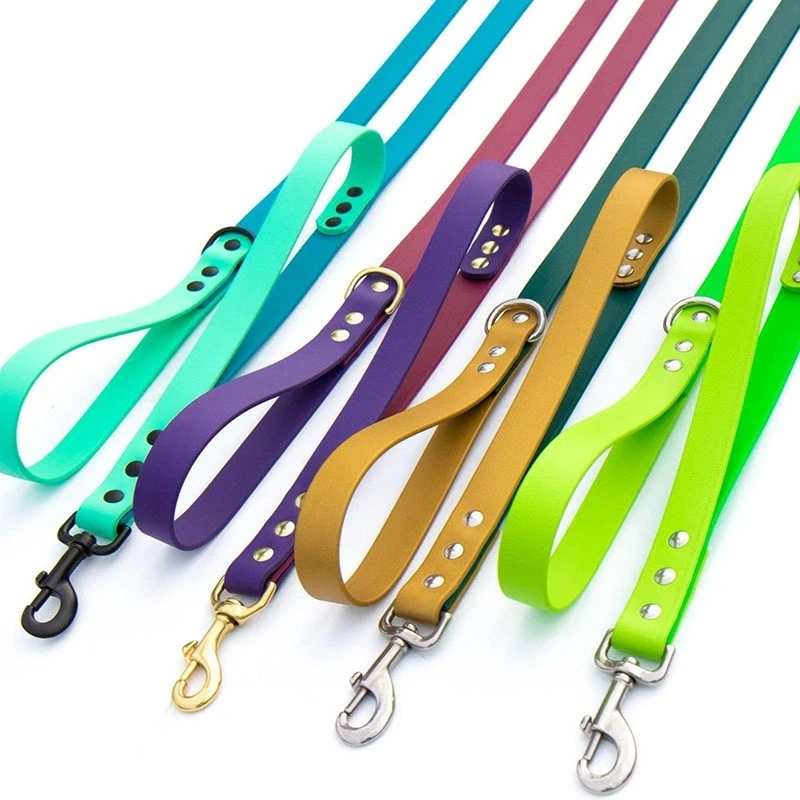
For pet brands and wholesalers, handle design can be used to create meaningful differences between products within the same collection.
Instead of changing every component, brands can develop several product variations using a common main material and hardware specification.
For example:
A basic loop handle for standard everyday walking products.
A padded handle for a comfort-oriented product range.
A traffic handle for products requiring an additional close-grip position.
An integrated handle for a simpler visual design.
This approach allows buyers to explore different product positions while maintaining some consistency in material sourcing and manufacturing arrangements.
However, every additional design variation should have a clear commercial purpose. Too many handle structures can increase sample development, SKU management, and purchasing complexity.
The most effective approach is to select handle designs that support the intended product positioning and can be manufactured consistently.
Working with an OEM Dog Leash Manufacturer
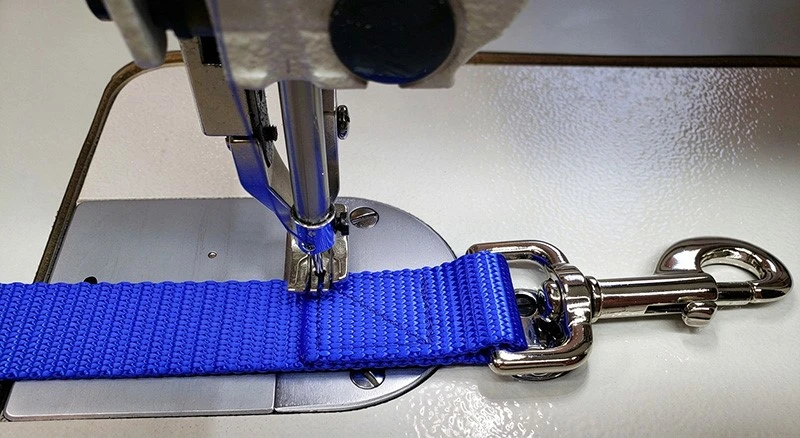
When working with an OEM dog leash manufacturer, buyers should communicate handle requirements alongside the main leash specifications.
A complete development brief should include the leash material, width, length, handle structure, hardware, color, branding requirements, and reference images or drawings.
Manufacturers can then evaluate the construction requirements and identify any details that need further confirmation.
At GH Material, custom dog leash development can incorporate different material, color, size, and hardware requirements according to the project specifications.
For buyers developing private-label pet product collections, discussing the handle structure during the initial sample stage can help reduce unnecessary design changes later.
The objective is not simply to create a different-looking handle, but to develop a product that matches the brand's positioning and can be produced consistently in bulk.
Conclusion
Dog leash handle design is an important part of product development for pet brands, importers, and wholesalers.
From standard loop handles to padded and traffic handle structures, each design creates different manufacturing requirements and product characteristics.
By defining handle dimensions, materials, stitching, reinforcement, and branding before sampling, buyers can communicate their requirements more clearly and evaluate OEM manufacturers more effectively.
A well-planned handle design can also help brands create product differentiation without unnecessarily complicating their entire leash collection.
Looking for a manufacturer for custom dog leashes?
GH Material supports custom pet product development for overseas brands, wholesalers, and importers. Contact our team to discuss your dog leash design, material selection, and OEM requirements.
Frequently Asked Questions
Q: What are the common types of dog leash handles?
A: Common designs include standard loop handles, padded handles, traffic handles, and integrated handles. Each has different construction requirements and product positioning.
Q: Can dog leash handles be customized?
A: Yes. Depending on the product structure, buyers can customize handle dimensions, materials, colors, padding, stitching details, and logo placement.
Q: Does handle design affect dog leash manufacturing costs?
A: Yes. Additional materials, padding, reinforcement, and sewing operations can affect material consumption and production complexity.
Q: What should buyers check when approving a dog leash sample?
A: Buyers should review handle dimensions, material arrangement, stitching quality, structural consistency, branding placement, and overall workmanship.
Q: Can manufacturers develop different handle styles for one dog leash collection?
A: Yes. Buyers can develop several handle variations using a shared material or hardware specification, subject to the manufacturer's production capabilities.