


Pet Leash Industry Guide: Materials, Types, Strength & Sourcing
Aug 26, 2026
Leave a message
Pet leashes are a basic part of the pet accessories market, but producing a reliable leash involves much more than selecting a strap and attaching a metal hook. For pet brands, wholesalers, distributors, and OEM buyers, factors such as webbing material, width, tensile strength, hardware, stitching, handle design, and manufacturing consistency all affect the final product.
As the pet products market continues to develop, buyers are also looking for leashes that offer better durability, comfort, waterproof performance, appearance, and customization. Understanding these specifications can help buyers select suitable materials, communicate requirements with manufacturers, and avoid unnecessary problems during sampling and mass production.
1. What Is a Pet Leash?
A pet leash is a connecting product used to control and guide a dog or other pet during walking, training, outdoor activities, or transportation.
A typical leash consists of several key components:

Webbing or rope
Snap hook
D-ring or O-ring
Handle
Stitching
Reinforcement components
Brand label or logo
Packaging
The overall performance of a leash depends on how these components work together. A strong webbing material alone does not guarantee a strong finished leash. The hardware, stitching, connection points, and overall construction must also be suitable for the intended application.
For B2B buyers, this means the finished product should be evaluated as a complete system rather than by looking at one specification in isolation
2. Common Types of Pet Leashes
Different applications require different leash designs. The most common types include standard walking leashes, rope leashes, training leads, traffic leashes, hands-free leashes, reflective leashes, and waterproof leashes.

Standard Walking Leash
Standard walking leashes are designed for everyday use. They are commonly manufactured from nylon or polyester webbing and are available in different widths, lengths, colors, and hardware configurations.
They are suitable for mass-market pet stores and general retail products.

Rope Dog Leash
Rope leashes use braided or twisted rope instead of flat webbing. They are often associated with outdoor, casual, and lifestyle-oriented pet products
Rope construction can provide a distinctive appearance and hand feel, making it attractive for premium or fashion-oriented product ranges.

Training Leash
Training leashes are usually longer than standard walking leashes. The additional length gives the dog greater freedom of movement while allowing the owner or trainer to maintain control.
Traffic Leash
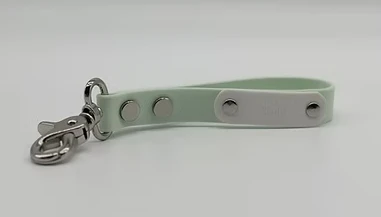
A traffic leash is a short leash designed for situations where close control is required. It can be useful in crowded areas, urban environments, or training situations.

Hands- Free Leash
Hands-free leashes are designed to attach around the waist or across the body. They are increasingly suitable for running, hiking, and other outdoor activities.

Reflective Leash
Reflective leashes incorporate reflective materials or reflective stitching to improve visibility in low-light conditions.

Waterproof Leash
Waterproof leashes are generally made with coated webbing or other water-resistant materials. They are particularly suitable for outdoor activities, rainy conditions,beaches, and products that need to be easy to clean.
3.Common Materials Used for Pet Leashes
Material selection directly influences durability, appearance, flexibility, cost, and the positioning of the finished product.

Nylon Webbing
Nylon is one of the traditional materials used for pet leashes.
Its advantages include good abrasion resistance, flexibility, and a relatively comfortable hand feel. Nylon webbing can also be produced in a wide range of widths and colors.
It is commonly used for:
Standard dog leashes
Wholesale pet accessories
Everyday walking products
Cost-sensitive product lines

Polyester Webbing
Polyester webbing is another common choice for pet products.
It offers good dimensional stability and color performance and is suitable for products where appearance and branding are important.
For private-label and customized pet products, polyester webbing can be used with different colors, patterns, printing methods, and woven branding.
PVC-Coated Webbing
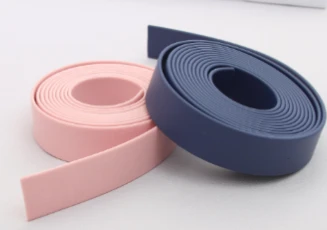
TPU-coated webbing is increasingly used in waterproof pet products.
The smooth coated surface is easy to clean and helps reduce the absorption of water and dirt. This makes TPU-coated webbing particularly suitable for outdoor products.
It is often used for:
Waterproof dog leashes
Waterproof collars
Dog harnesses
Outdoor pet accessories
For brands targeting premium or easy-clean products, TPU-coated webbing can provide a more modern product appearance than conventional textile webbing.
4. Why Does Webbing Width Matter?
Webbing width is one of the most important specifications when developing a pet leash.
Common widths include:
10 mm / 15 mm / 20 mm / 25 mm / 30 mm
However, choosing a wider webbing does not automatically mean choosing a better leash.
Width affects several aspects of the finished product:
Tensile performance
Hardware compatibility
Handle comfort
Product weight
Visual appearance
Stitching area
Material consumption
Manufacturing cost
For example, a narrow leash may be appropriate for small dogs, while a wider and heavier construction may be more suitable for large dogs or heavy-duty applications.
The width must also match the hardware. A 20 mm webbing requires hardware designed for the corresponding width; otherwise, the finished product may have poor appearance, incorrect positioning, or reduced usability.
Therefore, webbing width should always be evaluated together with material, thickness, hardware size, dog size, and intended application.
5. Tensile Strength Is More Than Webbing Strength
One of the most common mistakes in leash sourcing is focusing only on the tensile strength of the webbing.
The finished leash contains multiple components, and the weakest connection can determine the overall performance.
A simplified way to understand the structure is:
Webbing + Hardware + Stitching + Connection Points = Finished Leash Performance
For example, a high-strength webbing may be combined with an undersized snap hook. In this situation, the webbing itself may not be the limiting component.
The same principle applies to stitching.
If the webbing has sufficient strength but the stitching at the snap-hook connection is inadequate, the finished product may still fail to meet the required performance.
For this reason, professional B2B buyers should ask manufacturers about the finished leash tensile strength, not only the raw-material strength.
6. What Should B2B Buyers Include in an RFQ?
When requesting a quotation from a pet leash manufacturer, providing only a product photo is usually not enough.
A more complete RFQ should include:
| Specification | Example |
|---|---|
| Product Type | Standard / Training / Hands-Free |
| Material | Nylon / Polyester / PVC |
| Webbing Width | 15 / 20 / 25 / 30 mm |
| Webbing Thickness | Customized |
| Finished Length | Customized |
| Hardware | Snap Hook / D-ring |
| Hardware Material | Zinc Alloy |
| Stitching | Box-X / Bar Tack |
| Color | Custom / Pantone |
| Logo | Printed / Woven / Rubber |
| Handle | Standard / Padded |
| Packaging | Bulk / Hang Tag / Custom Box |
| MOQ | According to customization |
| Testing | Tensile / Abrasion / Colorfastness |
The more complete the specification, the easier it is for manufacturers to provide an accurate quotation and stable sample.
7. Quality Control for Pet Leashes
Quality control should cover the entire product rather than just checking the finished appearance.
Important inspection points can include:
Webbing
Check width, thickness, color, weaving quality, surface defects, and tensile performance.
Hardware
Check dimensions, surface finish, operation, corrosion resistance, and strength requirements.
Stitching
Check stitch consistency, reinforcement, loose threads, and connection structure.
Finished Product
Check finished length, hardware attachment, logo position, handle construction, appearance, and overall workmanship.
For products sold in different markets, buyers should also consider applicable local standards and testing requirements.
8. Customization Opportunities
Pet leashes offer many opportunities for private-label customization.
Brands can customize:
Webbing color
Webbing width
Webbing pattern
Logo
Hardware finish
Handle design
Reflective elements
Packaging
Product length
Material combination
For example, a brand may use 20 mm polyester webbing, a customized Pantone color, branded hardware, a woven logo, and retail packaging to create a consistent private-label product.
This makes pet leashes suitable not only for standard wholesale purchasing but also for OEM and ODM development.
Q&a
Q1: What materials are commonly used for pet leashes?
Nylon, polyester, rope, and TPU-coated webbing are commonly used. The right choice depends on durability, application, and product positioning.
Q2: What webbing width is best for dog leashes?
Common widths include 15 mm, 20 mm, 25 mm, and 30 mm. The choice depends on dog size, leash design, required strength, and hardware compatibility.
Q3: Is wider webbing stronger?
Not always. Leash strength also depends on webbing thickness, stitching, hardware, and connection points.
Q4: What is TPU-coated webbing good for?
It is ideal for waterproof, easy-clean leashes and outdoor pet products.
Q5: What hardware is used for pet leashes?
Common options include snap hooks, D-rings, O-rings, swivel hooks, and adjusters.
Q6: Can pet leashes be customized?
Yes. OEM suppliers can customize materials, colors, widths, lengths, logos, hardware, handles, and packaging.
Q7: What should B2B buyers check before ordering?
Confirm the material, webbing width, finished length, hardware, stitching, tensile strength, customization, MOQ, and packaging.