


The Early Days Of Dog Leash Materials
Aug 11, 2026
Leave a message
The Early Days of Dog Leash Materials
In the early days, dog leashes were mostly made of cotton and nylon webbing. These traditional materials tend to get mold‑prone and trap pet fur once they get wet.
For decades, cotton and plain nylon dominated the pet leash market. They were low‑cost, widely available, and soft enough for daily walking. But pet owners slowly noticed clear downsides. Cotton absorbs water very easily. After a rainy walk or beach visit, cotton straps stay damp for hours. Moisture builds up inside the fabric, leading to mold and bad odors. Nylon performs slightly better, yet loose dog fur still sticks tightly to woven gaps. Long‑haired breeds like Golden Retrievers or Corgis create the biggest mess, with fur tangled deep inside strap threads.
Many pet parents found themselves replacing fabric leashes every few months. Constant washing weakens fibers. Frequent wear creates frayed edges that hurt both human hands and pet skin.
How Industrial‑Origin Coated Webbing Entered Pet Industry
As outdoor pet‑raising demands keep growing, the coated‑webbing technology, which was originally developed for industrial applications, has gradually entered the pet‑product market. This gave birth to the coated‑webbing dog leash.
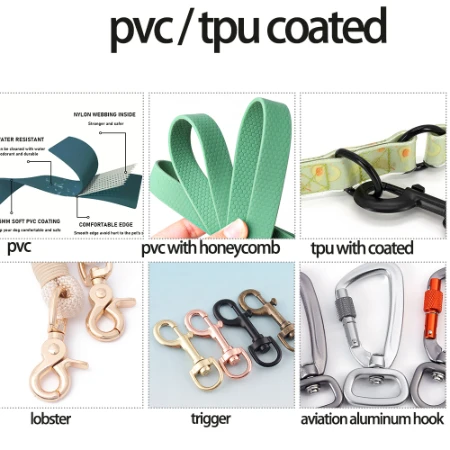
PVC‑coated webbing was first designed for heavy‑duty industrial use. Factories needed straps that resist water, dirt and chemical exposure. Engineers covered tough polyester base webbing with a solid PVC protective layer. The finished material stays strong under wet, muddy conditions.
Manufacturers in the pet space started to ask: can this durable industrial material solve common leash frustrations? Brands began testing PVC‑coated webbing for collars, harnesses and walking leads around ten years ago. Early small‑batch tests received positive feedback from dog owners who love hiking, camping and beach trips. Soon, coated‑webbing pet products moved from niche items into mainstream catalogs.

Core Benefits That Make PVC‑Coated Webbing Popular for Pets
-
Waterproof & Zero‑Fuss Cleaning
Standard woven fabric soaks up every drop of rain, mud or seawater. The sealed surface of PVC‑coated webbing blocks moisture entirely. When your dog runs through mud puddles, you simply wipe dirt away with one damp cloth. No machine washing, no hanging‑to‑dry time. Mold and bad smells no longer become regular headaches.
-
No More Trapped Pet Fur
Pet fur cannot sink into the smooth sealed outer layer. For owners of fluffy long‑hair dogs, this is a huge upgrade. You will not spend minutes picking loose fur out of woven strap threads after every walk.
-
Heavy‑Duty Strength for Pulling Dogs
The polyester webbing core delivers high tensile strength. The outer PVC layer protects inner threads from abrasion. Even strong pull‑prone medium‑large dogs cannot easily tear or stretch this leash. Matched with rust‑proof metal hardware, the whole set holds up well for long‑term daily use.
PVC‑Coated Webbing VS Traditional Nylon & Cotton Leashes
| Feature | Cotton / Nylon Webbing | PVC‑Coated Webbing |
|---|---|---|
| Water‑Resistance | Absorbs water fully | 100% waterproof |
| Cleaning Workload | Needs regular washing | Wipe‑and‑go quick clean |
| Fur‑Trapping | Catches lots of pet fur | Smooth surface repels fur |
| Mold Risk | High when wet | Very low |
| Durability | Fray after repeated washing | Resists abrasion & moisture damage |
Current Market Trend for Coated‑Webbing Pet Gear
Modern pet buyers treat their dogs as family members. They want pet accessories that fit active outdoor lifestyles. Waterproof, easy‑maintenance items keep gaining market share across North America and Europe.
Retail buyers report growing order volumes for collars, harnesses and leashes made from PVC‑coated webbing. Many brand clients also request OEM services: custom colors, heat‑transfer prints, reflective strips and private brand logos.
Final Thoughts
Cotton and nylon leashes served pet owners well for many years. Yet active outdoor lifestyles expose their material weaknesses. Transformed from industrial origins, PVC‑coated webbing answers real‑life pain points for today's dog parents. For wholesalers and brand owners, this material category represents a high‑potential product direction in the global pet accessory market.

Q&A
Q1: Is the PVC-coated webbing leash safe for dogs that like to chew?
A: No leash is fully chew-proof. PVC coating can be damaged by chewing. For dogs that chew, we recommend supervised use only and choosing a thicker-coated or chain-style alternative.
Q2: How do I clean the leash after a muddy walk?
A: Simply wipe with a damp cloth-no soaking or machine washing required. For stubborn stains, use mild soap and a soft brush. Hang to dry in a ventilated area.
Q3: How long does a PVC-coated webbing leash typically last?
A: With proper care, 2-3 years or more-2-3 times longer than regular fabric leashes. Inspect coating and hardware every 2-3 months for cracks, rust or loose threads.
Q4: Is this leash suitable for large, strong dog breeds?
A: Yes, but select the correct strength rating and width. For dogs over 40kg / 88lb, choose 2.5cm (1-inch) or wider webbing with heavy-duty hardware.
Q5: What's the difference between this and a regular nylon leash?
A: Regular nylon absorbs water, traps hair and frays over time. PVC-coated webbing is 100% waterproof, hair-repellent, wipe-clean and lasts much longer-ideal for outdoor adventures.